
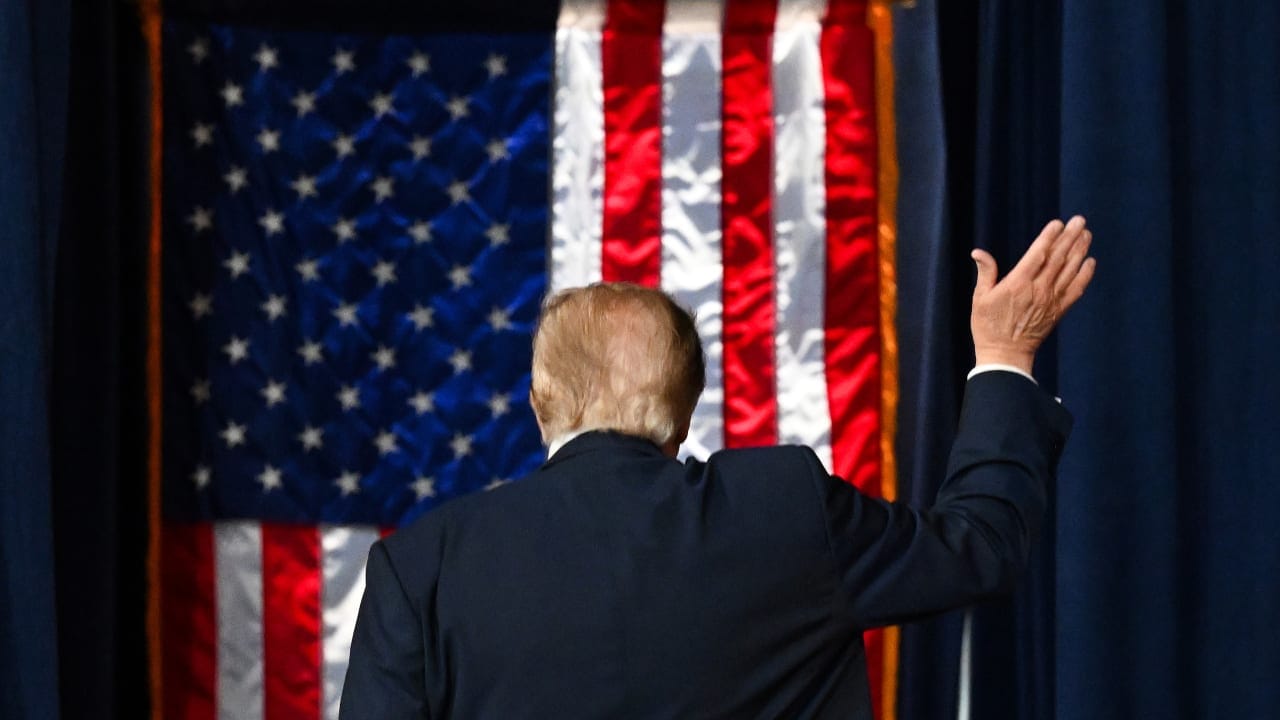

On November 3, as Americans voted in the midterms, US President Donald Trump announced that American military aid to Israel would end after 2026, two years before the current agreement runs out. For some four decades, that aid has been as much a promise as a payment, the clearest sign that Washington stands behind Israel.
A week before the announcement, Israelis had voted too, and as we go to print, no one yet knows who will form the next government. Whoever does will have to decide how much of the bill falls on Israeli taxpayers.
The Jerusalem Post’s senior military correspondent, Yonah Jeremy Bob counts almost $8 billion in lost aid, and warns that the greater loss may be in Washington, where the debate has shifted from who pays for Israel’s weapons to whether Israel should get them at all. Eric R. Mandel, the Report’s senior security editor, fears the fallout will leave American Jews more isolated and vulnerable as bipartisan support erodes.
Three of our writers remind Washington what the alliance pays back: For Tomer Rayfer and Sagie Sharon, Israel is a strategic investment with measurable returns; for Dalia Ziada, it is America’s front line in the Middle East. Norman Derovan takes the opposite view, arguing that losing the aid could finally force Israel out of a dependency that limits its freedom of action.
Between them lies a harder question: Has Israel been receiving weapons or buying a friendship, and how much of that friendship remains once the checks stop?
Part of the answer may lie in Gaza. For three years, much of the world has judged Israel by what it sees there, and what it sees next may count for more than any budget.
Oded Ailam, a former head of the Mossad’s Counterterrorism Division, writes that Hamas has lost most of its military power, and that only clean water, clinics, and schools that no longer answer to it will keep the group from coming back. If Israel backs the rebuilding of civilian life in Gaza, it may also find its path to better relations with the world. Neville Teller looks further ahead, sketching the case for a confederation of Jordan, Israel, and a sovereign Palestinian state.
Three years of nights in shelters and canceled performances emptied Israel’s cultural calendar. As cultural life returns, Tel Aviv has brought back its fashion week, and with it a runway with international ambitions. Ori Lenkinski watched the Upcoming Designers show at Israel Canada Fashion Week, where four young designers sent out sportswear stitched from discarded garments, patchwork leather, and sheer knits. Their collections were not about the war, but they were made in a country that has had little room to think about anything else.
In Jerusalem, the Old City is rebuilding its past while Beit Hanina invents its present. The Tiferet Yisrael Synagogue, dynamited by Jordan’s Arab Legion in 1948, is rising again, and Gil Zohar asks whether reconstructing a landmark keeps memory alive or quietly erases the history of its destruction. A few kilometers north, Dana Ben-Shimon visits Beit Hanina’s new late-night cafés, where young Palestinians gather over croissants instead of baklava. Both stories ask what a city chooses to keep, and what it lets go.
In my closing column, I ask a question of my own. This year, Israelis argued, often bitterly, over who carries the country’s burdens: military service, taxes, the war itself. Arab citizens and haredim (ultra-Orthodox) have usually stood at the edges of that argument. On October 27, Israel’s Arab citizens voted in numbers not seen in decades. Young haredim, women above all, are working their way into the economy, often against the wishes of their own leaders. Both are asking for a seat. Whatever government Israel ends up with, will it pull out a chair?
– Neria Barr