

More than half a century after I was born in Tel Aviv, I’m only just beginning to truly understand what life in Israel is really like.
We to-ed and fro-ed between Israel – where my father was from – and Britain where my mother was born, during my childhood. I spent a couple of years at school here and would later return every summer to be with my beloved grandmother and my large network of cousins.
In my twenties, I got married in Israel and my husband and I subsequently celebrated two of our three sons’ bar mitzvahs here – our third only cancelled due to the pandemic. Professionally, I’m a freelance journalist and regularly report on Israel for a variety of outlets. But it wasn’t until this weekend that I really began to grasp the importance of the thick, prickly skin for this nation of Sabras.
Imminent attack
On Friday afternoon, I flew into Ben Gurion alone. I had been due to spend several days in a rental apartment in Tel Aviv with my brother and his two-year-old, but he cancelled due to fears of an imminent attack. I was, of course, worried, but was trying to be optimistic and stick with my plans.
When I switched on my phone after landing, I saw a news report headlined: “Chance of US attack on Iran recedes ‘for now.’” This felt like the go-ahead to relax and make the most of a glorious Friday in Tel Aviv. The sun was shining, the roads were quiet, and the cafes were bustling. Surfers rode the waves while music played out from beachside bars. My brother missed out, I told myself.
That evening, I headed to one of my cousin’s in north Tel Aviv for a birthday party. I was welcomed with open arms and a barrage of questions: “Weren’t you worried?” “Aren’t you scared?” “Wow, you’re so brave coming now!”

And then my husband called. “The Foreign Office has just changed its travel advice to all but essential travel to Israel,” he said, adding that the US was scrambling its diplomats.
Conflicting opinions
While my stress levels skyrocketed, nobody else in the room looked particularly concerned; one cousin sought to reassure me by telling me a popular betting site was showing very low odds for an attack. There was no shortage of seemingly conflicting opinions in the room – as with any gathering in Israel – but the one thing they were united on was that I should not spend the night alone.
And so, I was dropped off at another cousin closer to the city center. There, we drank wine, ate ice cream, and she boasted that the neighborhood bomb shelter was one of the best in the city, buried three floors deep.
At 4 a.m., I was awoken not by the sound of missiles that I was so worried about, but the bizarre call of an inner-city cockerel. It continued for hours, so after 7 a.m., I got up, got dressed, and headed back to my rental apartment.
Ten minutes after arriving there, the sirens started. The phone rang off the hook as concerned relatives called to check in and make plans to pick me up.
There was no time to acclimatize to this new way of life. I was immediately in at the deep end. The first few hours were intense as I ran – and my cousin and family strolled – up and down the stairs from their Tel Aviv flat to the public shelter.
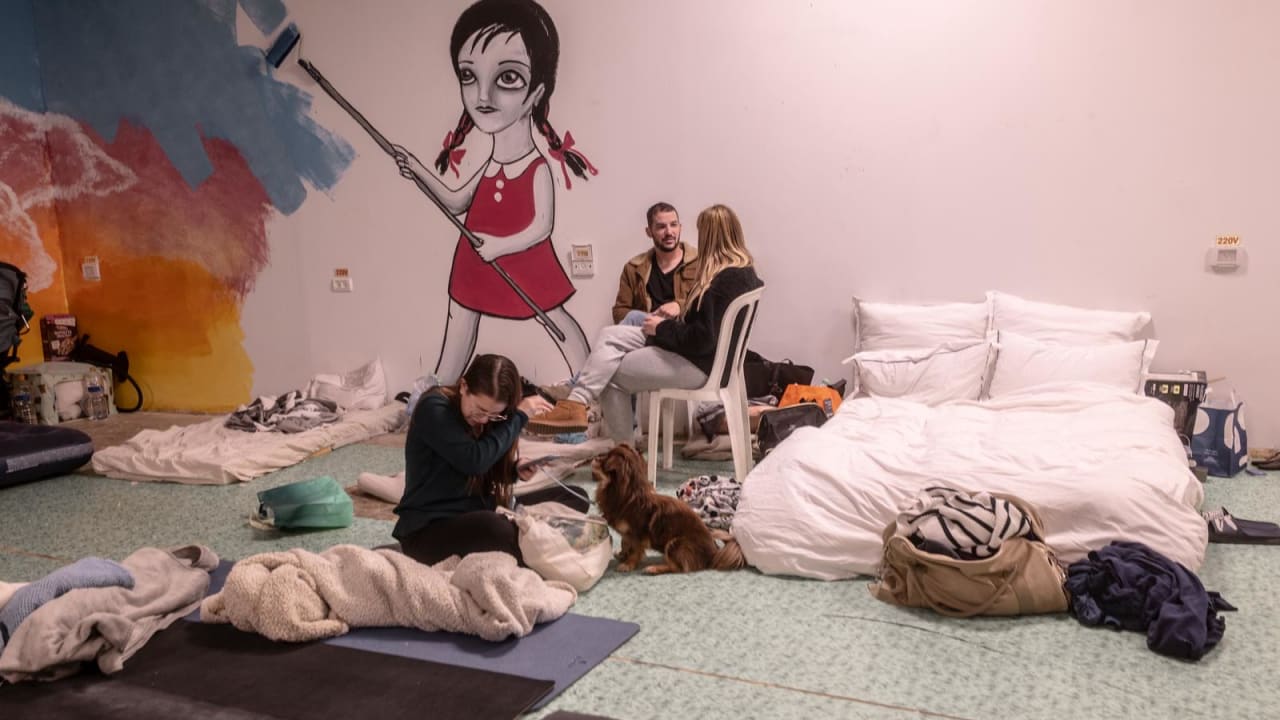
Inside the shelter, there was everyone, from pensioners to babies fresh out of hospital, as well as dozens of bewildered-looking dogs. Most people were glued to their cellphones, while others chatted with neighbors they’d probably not spoken to since the last conflict. The knots in my stomach tightened with boom after boom, while everyone else appeared calm.
“They’re intercepting them,” my cousin reassured me.
By the fourth shelter run, I began to go with the hectic flow. Between each visit, I rushed to charge my phone, visit the bathroom, and pick up snippets of the endless speculation from Israel’s top pundits blaring out on the TV. Later that day, I returned to my rental property with another cousin who came to keep me company and seek shelter in the apartment’s safe room.
Strange slumber party
That first evening, there was a boom far louder than anything we’d ever heard. We soon discovered that not only had a missile fallen nearby, but that it was just a few doors away from the relative I’d spent the previous night at.
Her walls were cracked, her windows were shattered, and glass covered the couch where I’d been sleeping hours earlier. Like others in the neighborhood, she and her son were in shock as they had to grasp that they had been made homeless. That night – before they were rehoused in a local hotel – they joined us in the safe room, the four of us huddled up together in this most unorthodox of slumber parties.

And here, we continue to lead our wartime existence, flitting between the small kitchen diner and our white-padded cell. Much like during the pandemic, normal rules of engagement have been suspended and replaced with a bizarre alternate reality.
Countless shekels were spent in the overpriced convenience store downstairs as we grabbed the quiet moments to stock up on both essential and extravagant supplies. We cooked, we ate, we watched limited TV, and played the occasional game of sheshbesh (backgammon) on a board ordered on Wolt, together with a desperately needed tub of Haagen Dazs ice cream.
With no idea of how or when I might be going home, I have been forced to take each day as it comes and make the most of the rollercoaster ride. Again, like in the pandemic, I’ve found that while most people’s working lives are at a standstill, mine is going at full throttle. I’ve received multiple commissions from media outlets to write about the situation, which has helped fill the endless hours and keep me sane.
Perhaps the biggest surprise was all the laughter, mostly while we were spread across the mattresses in the safe room. We were cracking jokes, playing games, and singing along to the tunes conjured up by the very talented young guitarist among us.
There have been moments of pure joy, love, and magic amid this madness, and it is this spirit that I am sure will keep Israel strong. ■