
Protests sometimes spawn the opposite of their desired result. The weekly haredi demonstrations against the Basimta coffee shop, which is open for business on Saturdays – the Jewish Sabbath and day of rest – have generated considerable media coverage.
Haaretz went so far as to publish the names, venues, and other details of the 15 best coffee shops around the country that are open on Friday night, or Saturday, or both. Its local Jerusalem publication, Kol Ha’Ir, went even further by publishing the names of almost a hundred Jerusalem-based coffee shops that operate on the Sabbath, including one that is a meeting place for Israelis and Palestinians.
Whether the list will send demonstrators elsewhere and relieve Basimta’s proprietor Yoel Ben-David of his weekly headache remains to be seen.
■ DURING THE period leading up to Rosh Hashana, many slihot tours take participants on a journey involving the history and geography of specific areas, with tales about some of the prominent figures who lived there.
Local tours often include the Nahlaot neighborhood adjacent to Mahaneh Yehuda, which in another era was home to Jerusalem’s most influential rabbis – the best known being Rabbi Aryeh Levin. He is often referred to as the “Father of the Prisoners,” as he frequently visited Jewish underground members who were incarcerated in the Russian Compound during the British Mandate. The prison is now a museum.
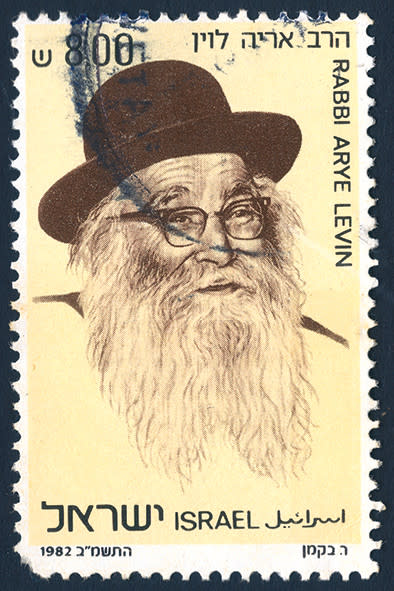
Living very frugally, Levin was also known as “The Tzaddik of Jerusalem,” caring for the sick and the poor. This non-judgmental rabbi was known for his outreach to people of all stripes.
A story about him relates that one day in Nahlaot, he chanced upon a young man whom he knew – who quickly disappeared. Levin eventually caught up with him, and asked why he was avoiding him. The young man replied he was embarrassed because he no longer wore a kippah. To which Levin responded: “I’m shorter than you are. I can’t see what is on your head; I can only see what is in your heart.”
An educator, storyteller, and actor
His American-born grandson, Rabbi Benji Levin, as a young boy would spend summers with his grandfather, often accompanying the legendary rabbi on his visits to widows and orphans, people in hospitals, or to some of the many rabbis to whom he was related.
Benji Levin settled permanently in Jerusalem while still a young man. As an educator, storyteller, and actor, he often led tour groups through Nahlaot, talking with great familiarity about its leading rabbis, most of whom were close or distant family.
Also acquainted with Nahlaot since childhood is Delilah Shemesh, a 20th-generation Jerusalemite descended from Jews who were expelled from Spain. A licensed tour guide, on September 7 she will share her knowledge about Jerusalem as it used to be, highlighting the well-known, influential figures who populated Nahlaot. This Hebrew tour is being organized by the Hatzvi Yisrael congregation.
Religious, educational, sporting, and community events
■ IN ABOUT nine months, Jewish residents of the capital will celebrate the 60th anniversary of the reunification of Jerusalem, which capped Israel’s victory in the 1967 Six Day War. The 60th anniversary logo has already been approved and is described by Mayor Moshe Lion as a link between tradition, progress, renewal, and the stones of the city’s walls.
The 60th anniversary year, which begins September 1, will be teeming with a variety of social, religious, educational, sporting, and community events for all sectors.
■ TAXI DRIVERS are already complaining about dwindling income due to the paucity of tourists, but it will get a lot worse once light rail construction is completed. Eleven months have passed since the beginning of this construction through Keren Hayesod, King George, and Strauss streets, and it doesn’t look as if the work is anywhere near completion.
Even so, many Jerusalemites returning from abroad save money by taking the train from Ben-Gurion Airport to the Navon Station, then taking a bus or the light rail the rest of the way home. When light rail construction is completed, stops will be close to more than 20 area hotels, ranging from budget to luxury. Now, however, many tourists can be seen lugging suitcases through the hotel belt area.
However, progress on current light rail projects seems to be slow, despite technological advances since the Red Line began operating in August 2011. It had been a long wait since its commencement in 2002.
■ IN CONGREGATIONS throughout Israel this week, religious Zionists commemorated the 91st anniversary of the death of Rabbi Abraham Isaac Kook, regarded as one of the founding fathers of religious Zionism.
In 1921, Kook was appointed the first Ashkenazi chief rabbi of Palestine, which was then under British Mandate rule. In 1924, he founded Mercaz Harav, the famous yeshiva at the entrance to Jerusalem. He was known for his outreach to Jews of all backgrounds and affiliations, and for his travels abroad to spread the word of Torah and raise money for Torah institutions.
Among the many rabbis who delivered sermons or lectures about him on Shabbat or on Sunday was New York-born Rabbi Tzvi Hersh Weinreb of Jerusalem, who said that as a student in a Brooklyn yeshiva, he had never heard of Kook. He referred to this as “a deficiency in Jewish education.” Once Weinreb became aware of Kook, he became an ardent student of his writings and carries a pocket-sized volume of some of Kook’s most pertinent quotes.
greerfc@gmail.com