
This article is the first in a series titled “HER,” an ongoing project by photojournalist Chen G. Schimmel, exploring the lives and inner worlds of the wives of Israeli soldiers.
FROM A woman who once worried about managing her children alone for 10 days while her husband was away, Eliana has become someone who has spent the better part of three and a half years holding together a household, a career, and three young children on her own. The recent wars have fundamentally changed how she sees herself and her capabilities.
Eliana’s husband, “X,” has been deployed intermittently since Hamas’s invasion in 2023 kick-started a series of wars.
For over 400 days and counting, X’s national duty has called him away from his familial responsibilities, and Eliana has drawn from her inner strength and community to make it work.
While chirpy when she spoke with The Jerusalem Post, little comments gave away the anxiety she has had to live with and make peace with since her husband was first deployed.
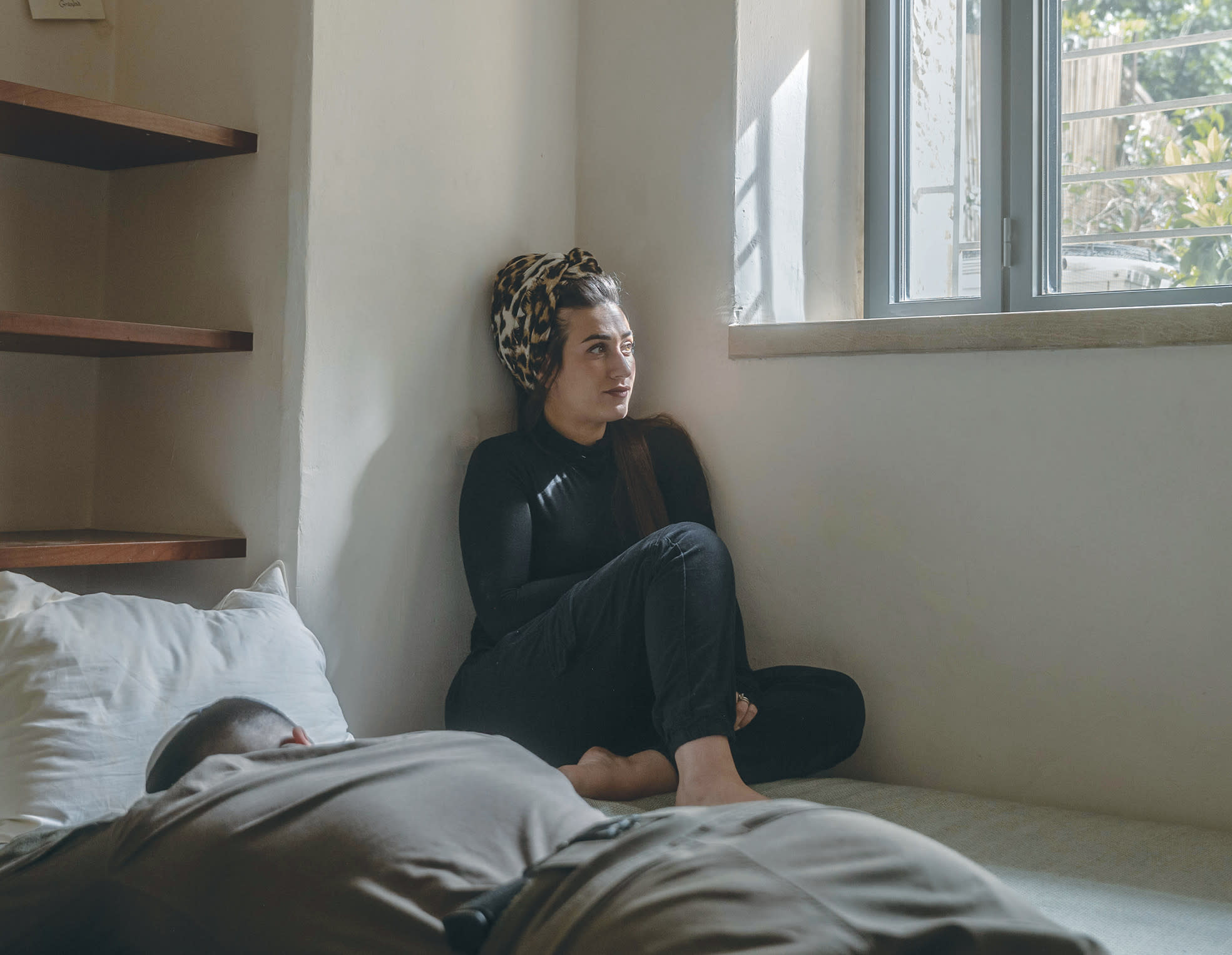
On October 9, 2023, two days after Hamas’s invasion, she received the message: “He is not among the wounded; he has not returned. That’s all we know at the moment.”
X did return home unharmed in October, and numerous times since, but for countless mornings, Eliana has had to wake up, make breakfast, and ready her kids without any word from X, without knowing where he was or if he was safe.
She spent days going about her normal routine, aware that her husband was somewhere across a border, surrounded by hostile elements.
“I don’t know if it is scarier to cope with long absences knowing nothing about what he was dealing with, or actually knowing some of the details,” she said, adding that this was not the future she once imagined for herself.
Shortly after the Second Intifada, Eliana made aliyah from London with her parents at age 13. She adjusted quickly to her new reality.
Within three years of arriving, she did what many take years to accomplish and found the love of her life, though it took another year of X chasing her before she would even give him a chance.
The pair crossed paths when Eliana ran into a school friend while trying to hitchhike from Gush Etzion back to Jerusalem.
Eliana complimented X’s basketball shoes, and he immediately offered them to her. X spent the next year courting Eliana until she finally gave him a chance. He has spent the years they’ve been together since bragging about how he knew she was the one.
Their romance was a slow burn, disrupted by X studying for a year in yeshiva and then training for years in the IDF to join an elite army unit.
During training, X was allowed a one-hour phone call per week, so the pair would manage long periods of silence until they were finally married in 2014.
“The army has always been a huge part of our life,” she told the Post, joking that it was like a “third person in the marriage.”
Eliana does not seem jealous of the time her husband has dedicated to the nation. Rather, she appears to be proud of his willingness to sacrifice for Israel.
That mentality, combined with their experience of long periods apart, has meant they adjusted quickly to the shortage of quality time together during the war.
“In a way, when this war started, it felt like we had done this before. It was obviously very different; we have children now, but the army has been part of our relationship,” she explained.
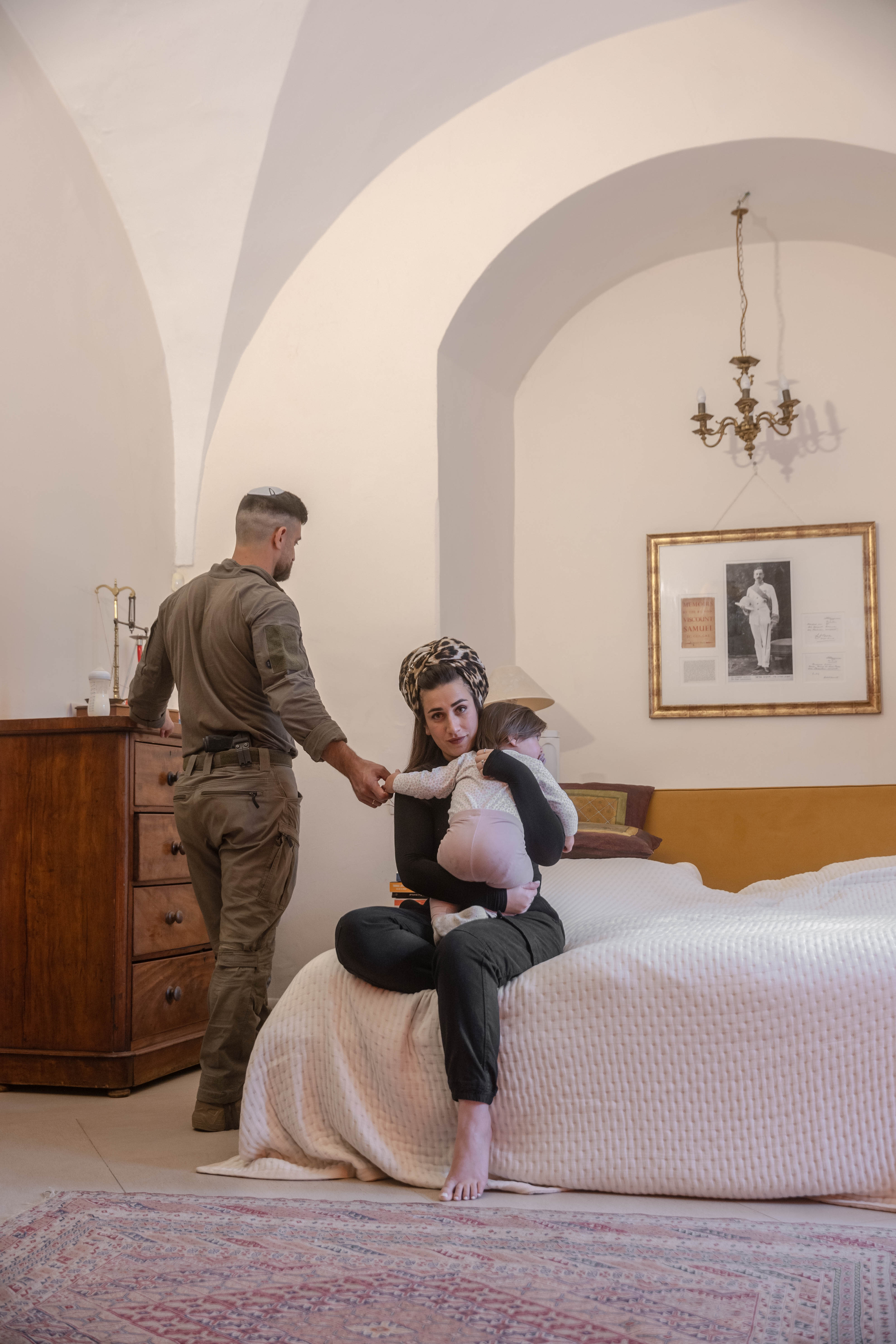
So normal was the absence that three years into their marriage, Eliana had butterflies before she took a trip to South America with her husband.
She told her mother the day before they flew that she was scared she would not like him. They had never spent more than five consecutive days together during their entire relationship, and the prospect of that undisturbed time was overwhelming.
Fortunately, the two got along and now have three children, the youngest of whom was born during the war. The military, war, and foreign enemies have continued to shape X’s relationship with not just his wife but with his children, too.
“My children have just been born into a reality where he’s often not around for long periods of time,” Eliana said, explaining that their young age has meant that her kids did not need to adjust to a new reality.
Because, she said, the war and all the things that accompany it have just been part of the world that they were born into.
“X has missed birthday parties and school plays. It’s more of a situation now where, if he is there, that’s so much fun, rather than, ‘Oh, my gosh, I can’t believe he isn’t here.’”
Perception of self defined by husband's military service
ELIANA’S PERCEPTION of herself and her own abilities has also been heavily defined by X’s military service.
“On the one hand, it’s really strengthened me. Looking back, I am really proud of the mother that I am and of the life that I have been giving my children over the last few years,” she shared.
“It’s obviously not the ideal situation, but I have been able to prove to myself and my children [how capable we are].”
For Eliana, the cost of her husband’s absence is weighed against the lessons, examples, and standards this sets for their children.
“We are teaching them about commitment, about our history, and about the values that define us,” she said.
“This war is demanding a lot from us, but it is also building a nation of resourceful, resilient people. We might have our differences, but we are all facing the same way, fighting for a future that is worth the hardship.”
“There is a profound comfort in knowing we are doing that together,” she continued. “I know our country is going through a complicated time, and the disagreements between us are real and often loud.”
“But despite that friction, I feel an immense sense of pride in what we are doing here. By showing up every day while their father is away, I’m teaching my children that some things are bigger than our own comfort.”
While empowered by her own strength, she said that the decisions and choices she would like to have made have not been possible.
Now at age four, Eliana’s daughter, for instance, continues to use a pacifier to self-soothe, and the mother relies on screen time more than other parents might to manage tantrums and tight schedules.
“I look back, and it’s been a really strengthening experience, understanding what I’m capable of. And at the same time, I can see clearly how much I’ve given up,” she said.
“There were hard moments with my kids where I thought: ‘I can’t do this anymore.’ But in my opinion, that’s part of it, feeling that, and then getting up anyway.”
A workplace that understands her reality
BEHIND THAT confidence is a workplace that understands Eliana’s reality and offers genuine support, something not every reservist’s or military wife’s employer provides.
At TeraSky, Eliana said, she has been able to balance motherhood, life as a military wife, and her work as a marketing professional. The place has given her a sense of identity beyond her home, with flexible hours and the trust and space she needed to do her job, she noted.
“I am surrounded by an incredible village – my community in Tel Aviv, my family, and the incredible support I get from my work colleagues at TeraSky. That communal embrace is what keeps us standing.”
“But even with that support, the evenings are long,” Eliana remarked. “When it’s just me getting three kids through dinner, baths, and bed, the reality of his absence is heavy. It isn’t easy, and it isn’t a fairy tale. It’s just hard work.”
“But there is a strange, fierce comfort in the struggle. I look around and see a nation of women and families doing the exact same thing,” she intoned.
“We are no longer the people we were before; we are becoming something sturdier. This war is the crucible, and while it has blown our ‘harmony’ to pieces, it is replacing it with a collective strength that cannot be broken. We are tired, yes, but we are resolute.”
Surviving years of intermittent contact with her husband in a war zone has left its scars, even if Eliana’s strength and survival abilities are at the core of her identity.
She recalled waking at 2 a.m., consumed by the question of how the military would notify her if her husband were killed, whether they would come in the night or wait until morning.
That fear felt tangible when she heard a knock at the door and saw a man in uniform through the peephole. It was her husband, home for a brief surprise visit, but the anxiety has never fully left her. It remains just beneath the surface each time X leaves again.
For now, Eliana reflects a familiar reality for many women in Israel: Strong yet anxious, emotional yet composed, missing a husband deeply while fully aware he has a job to do, and proud that he is doing it.
She awaits his calls, the sound of a knock at the door, and an end to this long conflict.
Eliana does so even as she hopes that the war will not be cut short, so that this will be the last time women are left waiting for messages and brief visits, even if it demands sacrifices from them now.