
On the morning of February 28, when Israel and the US launched airstrikes on Iran, I was browsing in a Dubai thrift shop.
I was in the UAE to embark on a seven-night voyage on the Celestyal Discovery, and I became one of 5,000 passengers stuck on six cruise ships that never left port.
My cabin balcony faced away from the city skyscrapers and toward Iran – just 150 km. across the Persian Gulf. (The distance from Tehran to my apartment in Jerusalem is 10 times as far.)
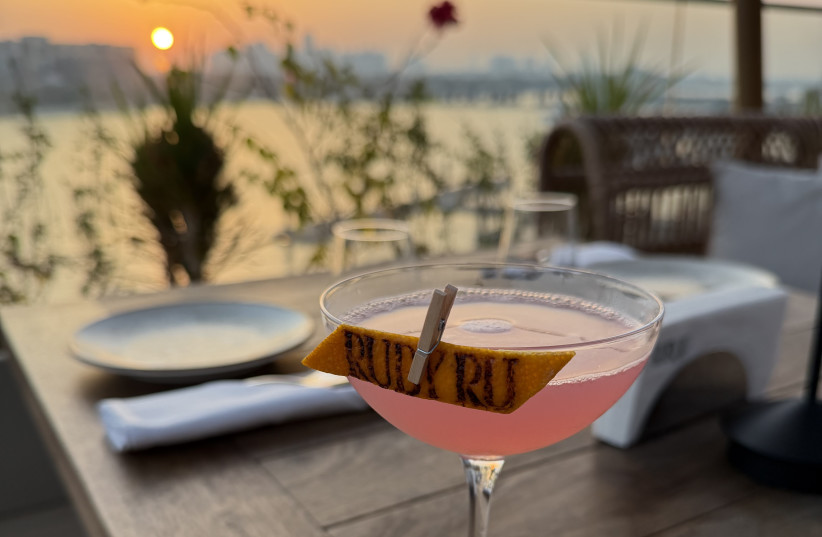
Relaxing on the deck of the Discovery that Saturday afternoon, enjoying my first Cosmo of the trip, I heard a distant boom. Debris from an intercepted Iranian missile had hit the parking lot of a five-star hotel across the street from the thrift shop, wounding four people.
That afternoon, the UAE closed its airspace and suspended most flights at Dubai International – the world’s busiest airport. In the middle of the night, the airport was hit, damaging a concourse. Early on Sunday, the iconic 60-story sail-shaped Burj Al Arab hotel was struck by fragments from an intercepted Iranian drone.
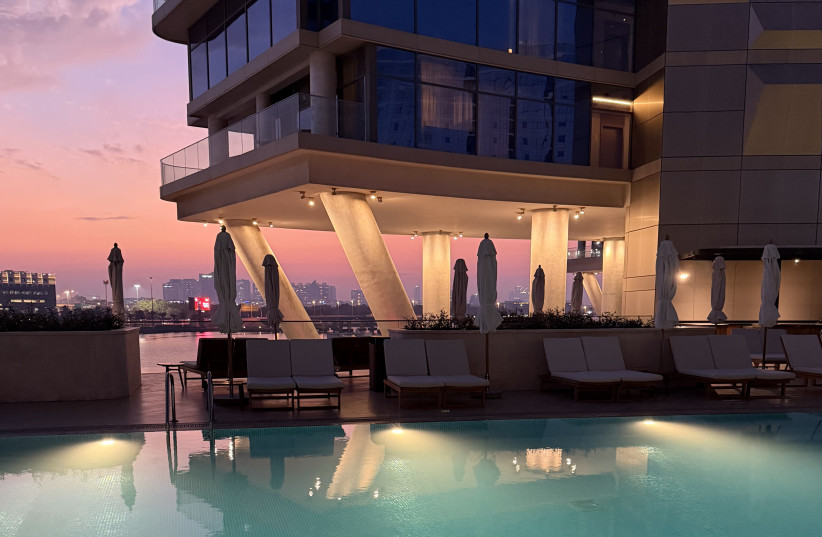
But the Discovery was a floating island of relative calm. Meals and activities continued as usual. The spa was open, though the casino was closed. Guests could enjoy musical performances, Cha Cha lessons, Zumba, foosball, henna painting, origami, quizzes, and “anti-stress coloring.”
I never felt unsafe, but I was getting a little bored sitting in one place. When it became clear that the ship wasn’t going anywhere soon, I set out to explore Dubai.
Getting around
In general, Dubai isn’t a very walkable city. In fact, Google Maps will often tell you it’s just not possible to get from point A to point B on foot.
The sleek modern metro system goes to the airport and many other points of interest, and there are buses (with air-conditioned bus stops) and ferries.
The most romantic form of mass transit is the abra, a traditional wooden water taxi. Costing less than one shekel, an abra ride may be the best bargain in Dubai.
The biggest mall in the world
The Burj Khalifa, 830 meters tall, is the tallest structure in the world, and one of the most visited, attracting about 17 million visitors per year.
Getting to the 124th floor costs around NIS 221. Access to the 154th floor costs around NIS 658 and includes refreshments.
Next door, the Dubai Mall is even more popular, with more than 100 million visitors annually.
The Dubai Mall is also the biggest in the world, with 1,200 stores. These range from luxury brands like Chanel and Gucci to mass-market labels like H&M.
Other attractions include an aquarium and an Olympic-sized indoor skating rink.
It can be overwhelming to navigate such an enormous space. Helpful interactive maps can draw a dotted line to direct you to your destination, and tell you how long it will take to get there.
The Museum of the Future
Another Dubai landmark, the Museum of the Future, is just two stops from the Mall on the Metro.
It’s an enormous silver torus – a lopsided donut – inscribed with Arabic calligraphy, with an elliptical void at the center.
The museum opened in 2022 and cost $136 million to build. Its hi-tech exhibits imagine life in the year 2071, including aboard a space station named the OSS Hope and in a digital version of the Amazon rain forest.
Old Dubai
Amid all the ultramodern glitter, you can still find remnants of old Dubai, especially in three neighborhoods strung along the banks of Dubai Creek: Al Shindagha, Al Fahidi, and Al Seef.
The Al Shindagha Museum is divided into 22 pavilions spread over 80 historical houses. In the Culture of the Sea Pavilion, you can learn about the history and building of dhows – traditional wooden sailing vessels – and put on a headset for a virtual reality experience as a Dubai pearl diver.
In the Perfume House, you can compare natural and artificial versions of scents and learn the art of perfume-making.
Other pavilions focus on crafts, beauty and adornment, jewelry, healthcare, poetry, music, dance, faith, food, and trade. There’s so much to see, you might want to visit over several days.
A short waterside stroll from the museum takes you to the calm, pedestrian-only Al Fahidi neighborhood.
This area of lovingly restored 19th-century buildings made of stone, gypsum, teak, and sandalwood is dotted with otherworldly air towers (barajeel). These structures (traditionally built of mud, coral stone, and palm fronds) catch breezes above the rooftops, cool the air passively, and direct the cooler air down into the alleys and houses, reducing temperatures by as much as 20 degrees Celsius.
The Arabian Tea House is open all day and is especially popular for breakfast, with turquoise benches in an air-conditioned secret garden. Thin bread comes to the table piping hot from the oven and crisps as it cools.
At the Coffee Museum, the NIS 8.5 entrance fee gets you two small cups of coffee – one Arabic, and one Ethiopian.
The Mazmi Café serves cardamon-flavored Arabic coffee gelato – plus other flavors like rose, saffron, and hibiscus – in the shady tree-filled courtyard of a historic building.
At the 15-room XVA Art Hotel, the café serves vegan and vegetarian food. The hotel also has one of the best gift shops in the city, with stationery and housewares designs from Little Majlis – made in the UAE
You can admire ornate daggers in an elegant shop called Zey, which also sells ceremonial canes, swords, traditional clothes, and coffee pots.
The Sheikh Mohammed Centre for Cultural Understanding has a small museum and offers cultural meals and tours, including Iftar meals during Ramadan.
The next stop along the creek is the Souk Al Seef, a shady, breezy, waterfront promenade lined with rather touristy shops and cafés.
It has probably the prettiest Starbucks in the Middle East – home base for influencers having their pictures taken in flowing sun dresses. There’s also a Tim Hortons eatery for homesick Canadians.
One of the nicest places to sit is on one of the deep wooden benches overlooking the creek just outside the low-profile McDonald’s.
The ‘QE2’
Dubai is also home to a piece of modern history: the legendary Queen Elizabeth II cruise ship, now a four-star hotel.
Tours are held daily, upon request, and include visits to the bridge, an original guest cabin, and a garage with a vintage Rolls-Royce. (The ship could hold up to 80 passenger cars.)
The ship’s restaurants and Golden Lion pub (the oldest pub in Dubai) are open to the public, and the ship offers elaborate afternoon teas on weekends.
Cabins are available for very modest rates, starting at around NIS 116 per night at the moment (given the war), but more commonly starting at around NIS 300 per night.
Israeli tourists and the Jewish community
More than a million Israeli tourists have visited the UAE since the 2020 Abraham Accords, with more than100 weekly (pre-war) flights from Ben-Gurion Airport.
Everywhere I went in Dubai, I heard people speaking Hebrew. Hotel TVs air Israel’s I24 News with both English and Arabic subtitles. Some stores in the Dubai Mall sell Seder plates.
The UAE has at least three minyans and eight kosher restaurants. At Mosaica, on the 31st floor of the Sofitel Downtown near the Dubai Mall, Shabbat takeout is available until 4 p.m. on Fridays.
Dubai also has a kosher grocery store.
The only shul in the UAE is the Moses Ben Maimon Synagogue in the Abrahamic Family House in Abu Dhabi – an interfaith complex that also includes a mosque and a church. The salaries of the rabbi and the cantor are paid by the UAE government.
In 2019, the Jewish community in the UAE gave a Torah scroll to Sheikh Mohamed bin Zayed Al Nahyan, who was then the crown prince of Abu Dhabi and is now the President of the UAE, as a gesture of appreciation. He loans it back to the community for the High Holy Days.
Chabad is present in the UAE but keeps a low profile, not offering Shabbat meals to the public.
In 2024, a 28-year-old Israeli-Moldovan Chabad rabbi based in the UAE – the manager of the kosher market – was abducted and murdered in Dubai in what Israel called an “antisemitic terrorist incident.” Three Uzbek nationals were quickly arrested for the crime and sentenced to death by the UAE.
Getting home
An estimated 12,000 Israeli citizens – both residents and tourists – were in the UAE when the war broke out.
Two days before the cruise was scheduled to end, Celestyal transferred the remaining passengers from the ship to a five-star hotel near the airport. My luxurious room had a wall of glass with a view of Dubai Creek and the Burj Khalifa – but I was ready to go home.
My original return flight to Israel on March 7 was canceled early in the war; the next FlyDubai flight to Tel Aviv wasn’t scheduled until March 21.
People reportedly were paying hundreds of thousands of dollars to escape the region on private planes. One airline offered NIS 10,000 flights to Sharm el-Sheikh, Egypt; it was normally a NIS 1,500 trip. But I wasn’t in that much of a hurry.
I had registered for evacuation flights with both the Israeli consulate and the US Embassy, but they couldn’t tell me when flights might be available.
After several other options were booked and canceled, I finally found a flight to Amman, Jordan, for March 8.
In the FlyDubai business class lounge, I heard other passengers’ phones sound the familiar chunka-chunka of missile alerts in Israel.
With presumably unintentional dark irony, the lounge’s dinner menu included “Iranian Mixed Grill.”
I’d arranged to have a driver pick me up at the Amman airport and take me to a downtown hotel, since the border crossing wouldn’t open until the next morning.
The Allenby/King Hussein Bridge crossing, which connects the West Bank with Jordan, is primarily designated for Palestinian residents and tourists. Most Israeli citizens are normally prohibited from using it, and instead use the crossing by Beit She’an. However, the Israeli Ministry of Transportation confirmed to me via WhatsApp that Allenby was open to Israelis.
Eager to get home, I paid NIS 450 for VIP shuttle service, and within an hour I was back in Israel – rather than waiting an hour for the regular bus, and even longer in the line at the Israeli end.
I scanned my Israeli passport at the single biometric reader, and was never happier to see the little entry card pop out to welcome me home.
Another driver was waiting for me in the parking lot, and an hour after that, I walked in my front door to be greeted by my cat.
Arabian nights at sea
The Arabian cruise season typically runs from November through April, when the weather is most pleasant. It was 33 degrees when I boarded the ship in Dubai, and a chilly 13 in Jerusalem that day.
Cruise lines have canceled the remainder of their Arabian sailings for this spring but are booking for the fall/winter. On Celestyal, for example, seven-night cruises in November start at $739 per person. ■
The writer was the guest of Celestyal Cruises.