Europe's leaders keep saying they fear a wider war. Iran's regime keeps widening it anyway.
Two drones hit the US Embassy complex in Riyadh this week, sparking a fire and damaging part of the building. Gulf states are issuing statements about self-defense. The message from the region is this: Tehran is willing to strike anybody in reach.
In London and Paris, the message is embarrassing. "We were not involved."
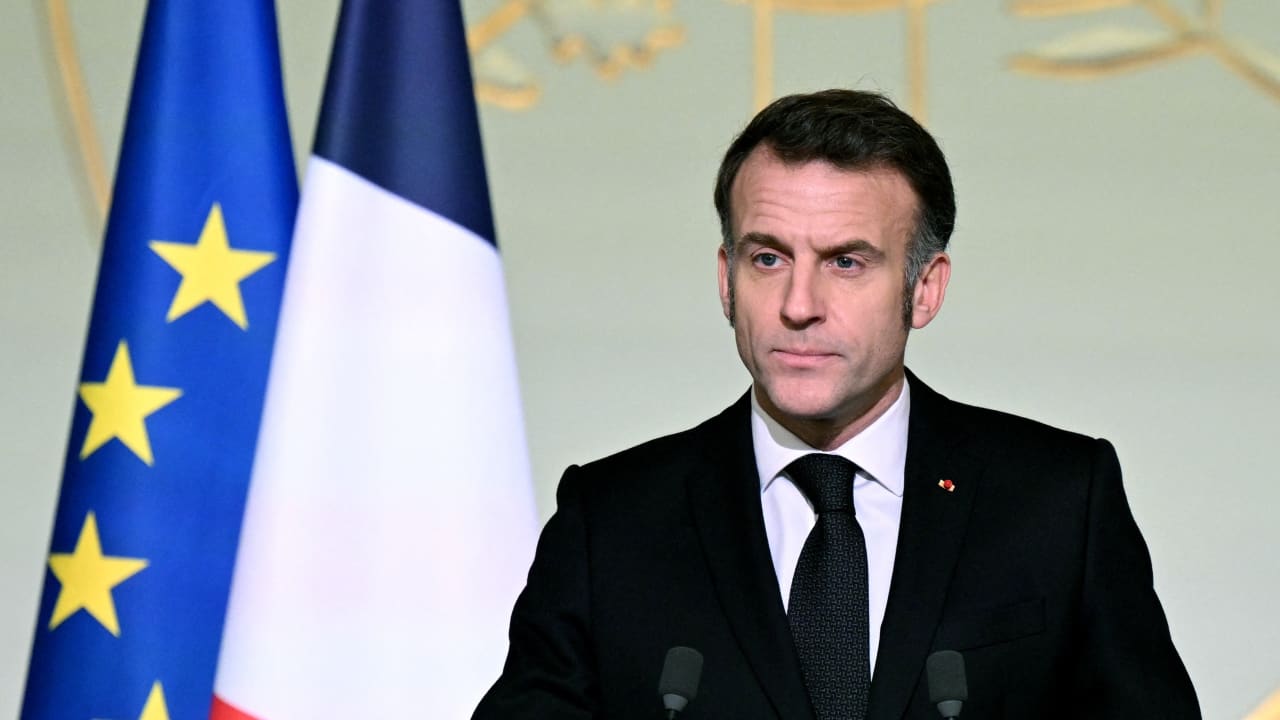
UK PM Keir Starmer told the House of Commons that Britain "will not join offensive action" against Iran. French PM Emmanuel Macron called for an urgent UN Security Council meeting and pushed the crisis back into diplomacy. Starmer and Macron want the benefits of American and Israeli force without the discomfort of standing openly alongside them.
Iran's regime measures that kind of calculation in real time. It's been doing so for decades and has gotten quite good at it.

Starmer's position rests on a rhetorical trick he probably hopes nobody examines too closely. He treats Iran's attacks as dangerous enough to justify protection while treating decisive action as reckless. Iraq. Legal caution. The language of restraint. Britain can make a serious legal and strategic argument for participating in operations aimed at stopping Iran's missile and drone campaign. It's done far harder things in coalition warfare when its leaders believed the threat mattered. Starmer's signaling, whether intended or not, is that Britain believes it matters less this time.
That stance looks worse when you read Britain's own security assessments. Parliament's Intelligence and Security Committee describes a hostile state that plots and intimidates beyond its borders. A House of Commons Library briefing lays out Iran-linked hostile state activity as a live national security concern on British soil. A government that tells its public Iran is a top-tier threat should govern like it.
The overlooked domestic dimension
There's also a domestic dimension Starmer would prefer to leave unexamined. The Islamic Centre of England faced a statutory Charity Commission inquiry over governance concerns serious enough to require an interim manager and court-ordered reforms. The regulator removed a governing requirement tied to a role described as the UK religious representative of Iran's supreme leader because it undermined the institution's independence. That's the UK regulator, in plain language, describing a British charity with Tehran's influence written into its legal structure. London's Al-Quds Day rallies have repeatedly drawn controversy over Hezbollah flags. Britain's own Shawcross Review of Prevent flagged the risk of public funds reaching bodies ideologically aligned with the Iranian regime.
None of this forces Starmer's hand on a military decision. It does make the posture of comfortable distance look less like prudence and more like avoidance.
Macron plays a similar game with better adjectives and grander staging. After the US-Israel strikes, he called for an urgent UN Security Council meeting. France's foreign minister announced Paris was neither involved nor informed, while France worked with China on de-escalation. French Rafale jets were operating to secure airspace over French bases in the region. That capability exists. Macron's keeping it in a narrow defensive box while positioning France as the diplomatic manager of a war he won't help prosecute.
He also signed, with Starmer and Germany's chancellor, a joint statement condemning Iran's attacks and signaling support for "necessary and proportionate defensive action to destroy Iran's capability" to fire missiles and drones "at their source." Read that carefully. It implies force against launch capabilities. It also avoids joining the offensive campaign that created the opening to do exactly that. The fingerprints stay light. The language stays hard. Macron's had practice at this.
France blamed Iran's intelligence ministry for a foiled bomb plot near Paris in 2018 and seized assets linked to Iranian intelligence services.
Strategic autonomy is a serious idea. It becomes considerably less serious when it evaporates under pressure from the first real crisis that requires picking a side.
Iran's regime doesn't need European endorsement. It needs European hesitation. When Britain and France treat American and Israeli force as something to be managed rather than supported, Tehran gets to tell its own public that the West is fractured and divided. European statements become a kind of operational intelligence. Tehran learns which capitals absorb blows quietly. Right now the answer is obvious.
The Gulf isn't waiting for Europe to find its footing. The GCC foreign ministers condemned Iranian attacks and affirmed the right to respond. The drone strike on the US Embassy in Riyadh makes the point efficiently. Iran's retaliation isn't staying on the Israel front. Energy shocks, shipping disruption, terror activity and transnational repression travel fast and they don't stop at European borders.
The honest version of what Starmer and Macron are doing is outsourcing hard power to allies while claiming the authority to restrain those allies.
Starmer should treat Iran as the hostile state his own security services describe, tighten oversight of Iran-linked influence in British institutions, and stop letting "defensive only" function as a permanent hall pass. Macron should match France's regional military presence with actual political courage, stop treating the UN as a strategy, and drop the performative surprise about not being informed. Great powers build influence by showing up.
Two drones hit the US Embassy in Riyadh. Iran targeted a British base in Cyprus. Starmer issued a statement. Macron called a meeting. We will continue fighting, no matter what they say.