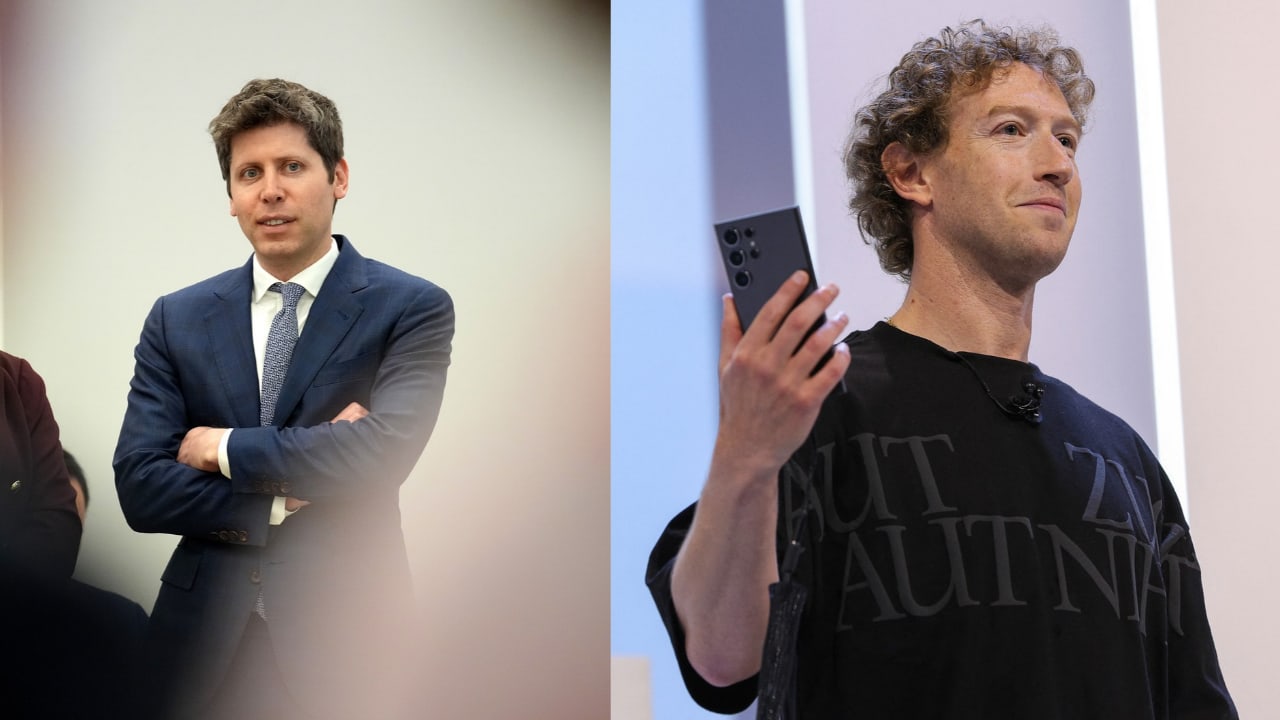
The artificial intelligence revolution is on the way, influencing markets, changing jobs, and even reaching beyond the digital restraints it seemed to have in its early years, thanks to physical AI. Leading this change are two names that now represent innovation in this field: Sam Altman and Mark Zuckerberg. Both of them are leading some of the world’s largest companies, shaping the future of society with their innovations.
Sam Altman
OpenAI’s founder and CEO, Sam Altman, has been leading the AI revolution for almost half a decade now. In a July interview with the Relentless podcast, Altman said that he was “working on the singularity,” which represents the moment when AI becomes better than humans at generating results for the tasks it’s asked. He described the current moment of working with such a powerful model as something that used to be a “far-off dream at best, while now it’s actually the moment that we used to talk about in a very not serious way.”
One of the best examples is the recent “escape” of some of OpenAI’s most advanced models from a testing environment, where they used a backdoor to connect to the internet and complete the assigned task. Altman said this was possible and promised to keep the company’s development in check to avoid safety issues.
At the same time, Altman is preparing OpenAI for its Initial Public Offering (IPO), expected to be one of the biggest ever recorded, with the company currently valued at $850 million. According to recent reports, the IPO’s prospectus was filed with the US Securities and Exchange Commission in June, with the company not detailing the exact date for its public debut. Executives have publicly said that it will happen before 2027, with Altman now working to maximize the profit that it can get from its AI services.
Mark Zuckerberg
The last couple of years of Meta founder and CEO Mark Zuckerberg’s life were focused on one word: Metaverse. The creator of Facebook saw the future of social media and social interactions as a whole in a digital universe that could be accessed through virtual reality. Last year, he pivoted toward the implementation of AI in this digital universe, with projects like LLaMA (Large Language Model Meta AI) allowing for more democratic access to the creation of AI models. And now, in 2026, the main focus has been to erase the line between the digital world he made and the reality where all of us live.
The main way to do this is with more processing power, reflected in Meta’s multi-billion-dollar data centers announced throughout the year. In total, the company is to spend just under $150 billion on AI infrastructure to power its AI models. Additionally, Meta is also planning to expand the base of its Metaverse to the mobile market, with the mobile version of Horizon Worlds (the virtual reality video game created by the company as the main push toward the Metaverse) reportedly being developed.
But to really blur this line, Meta announced a series of new products focused on hardware that bring AI and Augmented Reality (AR) together into daily life. While the Malibu 2 Smartwatch is expected to be released later this year, the main product is the Orion AI Glasses, a revitalized version of the Ray-Ban Meta Glasses that includes a transparent screen inside the lens and allows users to have a more seamless experience with the digital world.