Most Americans know that, in the midst of the Revolutionary War, the 13 American colonies declared their independence from Great Britain on July 4, 1776.
But far fewer are aware that Jews were directly involved with the American Revolution. Not only did Jews help finance the Patriot effort - as in the case of Haym Salomon, known as the “Financial Hero of the American Revolution” - some 100 Jews also fought in the war, participating in battles at Valley Forge, Bunker Hill, and beyond.
As it happens, Jews have played pivotal roles throughout key moments in American history.
As the United States Semiquincentennial approaches on July 4, a new, year-long virtual lecture series, “250 Years of Jewish Life in America,” co-presented by 70 Faces Media and the Weitzman National Museum of American Jewish History, will celebrate this milestone anniversary by examining how the Jewish story and the American story are fundamentally intertwined.
Throughout 2026, monthly online conversations with leading Jewish historians will journey across generations of American and Jewish history, from examining the lives of the earliest Colonial settlers to exploring the vibrant, diverse American communities in which we reside today.

“Most Americans (Jews included) have no idea that Jews were in the US in 1776, let alone what they did,” Jonathan Sarna, professor emeritus of American Jewish History at Brandeis University, said via email. Sarna will kick off the event series on Thursday, March 12, at 7 p.m. ET with a conversation about Jews and the American Revolution.
“Jews are part of America and have been since 1654,” he added.
More events and other highlights
Other events in the series include a conversation with University of Cape Town Professor Adam Mendelsohn about the “everyday experiences” of Jewish soldiers in the Civil War on April 16, as well as “The First Salute,” a discussion on May 7 about the little-known story of a small group of Jewish merchants on a Caribbean island who helped tip the scales in the fight for American independence.
That conversation coincides with the Weitzman Museum’s forthcoming exhibition, “The First Salute: An Untold Story of the American Revolution,” which opens on April 23. It is the first-ever major museum exhibition to explore the outsized contributions these Jewish traders made to the American cause, and the exhibit zooms out to take a “long look to see where we ended up,” said Dan Tadmor, president and CEO of the Weitzman Museum.
“Jews are, and always have been, a part of the fabric of American society,” Tadmor said. “The American Jewish story is a part of the American story.”
The Weitzman, Tadmor pointed out, is located on Independence Mall in Philadelphia - just steps away from the birthplace of the Declaration of Independence and the US Constitution. “That’s not a coincidence, that’s by design,” he said. “We are here, in this historic center of where it all began, because there’s great symbolism in that.”
Tadmor added: “A central pillar of the American Jewish story is what happens when Jews come to America and, for the first time in 2,000 years, they’re afforded the liberty and opportunity that they haven’t had since the last time Jews were sovereign. And what happens is flourishing and thriving and success and contribution.”
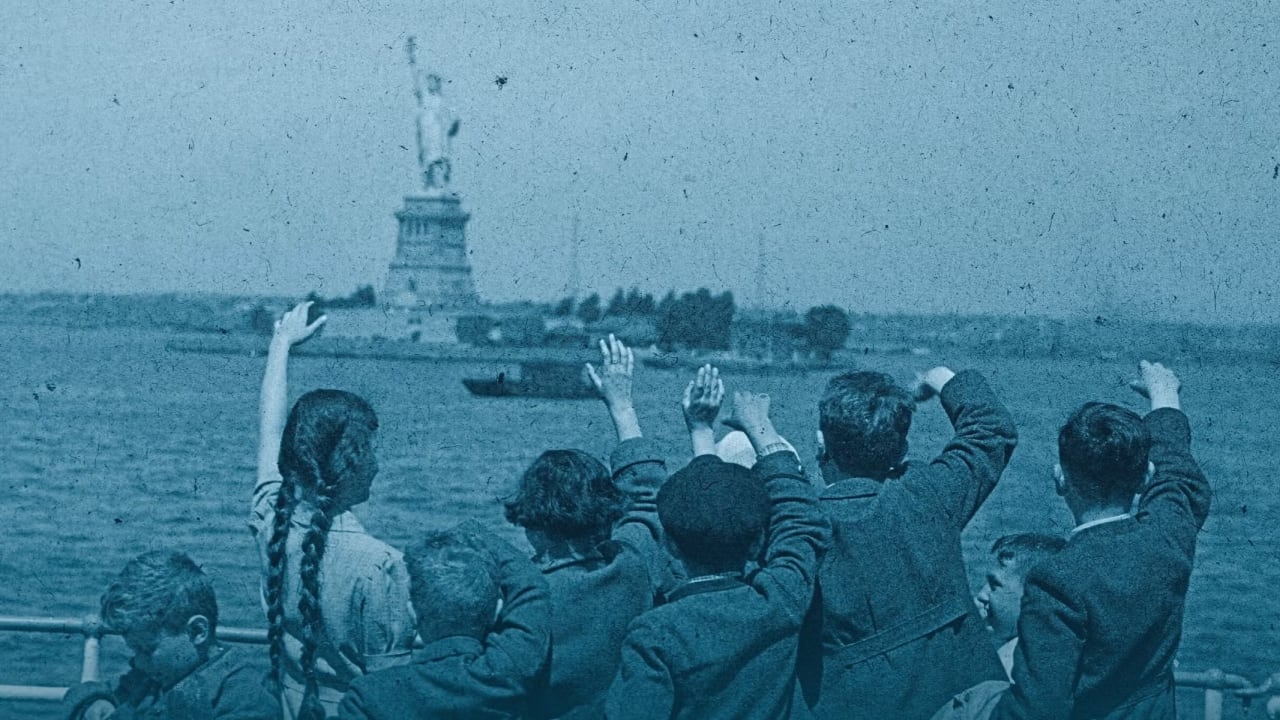
Other highlights of “250 Years of Jewish Life in America” include a lecture by historian Pamela Nadell, a professor at American University, about antisemitism in early America and its European roots, and a conversation about Jewish mass migration to the United States with Rebecca Kobrin, a professor of American Jewish history at Columbia University.
“American Jews have, to our glory, figured prominently in the saga of America’s moral and social progress, and America has provided its Jews with the freedom to develop our own traditions and resources,” said Thea Wieseltier, director of strategic projects and public programs at 70 Faces Media, who is organizing the series.
“The impact of American culture on Jewish life has been for better and for worse, but this is the first place in the Diaspora where the future of Judaism in our community is entirely in our hands. And it’s the first place in the Diaspora where we can fight against antisemitism according to the country’s own founding principles and in the name of democracy.”
At least one event will take place at the Weitzman National Museum of American Jewish History, where it will also be livestreamed.
“We’re really excited,” Tadmor said about the event series.
“Collaborations between great organizations are a multiplier,” he added, referring to the Weitzman and 70 Faces Media. “It’s putting together the strength of two organizations. I think we’re going to do something really, really special together.”