Israel has been beset by so many crises involving terror and war that it has, unfortunately, neglected dealing with other life-and-death issues. One example is chronic air pollution, which, according to experts, causes 5,000 deaths of Israelis each year from respiratory, cardiovascular, neurological, oncological, and other diseases and does not even include any of the more than 8,000 annual deaths caused by toxic tobacco smoke in the air.
Now, a new study published in the Israel Journal of Health Policy Research, titled “Premature mortality and years of life lost attributable to ambient air pollution in Israel, compared to Europe: analysis and implications,” attempts to bring the topic to the forefront.
It was written by Prof. Hagai Levine (a leading epidemiologist, chairman of the Israel Association of Public Health Physicians, and faculty member of the Hebrew University of Jerusalem), Dr. Ilan Levy of the Technion-Israel Institute of Technology’s Center of Excellence in Exposure Science and Environmental Health); Ben-Gurion University of the Negev Prof. Itamar Grotto; and his university colleague, public health expert Dr. Isabella Karakis.
Air pollution causes severe, long-term health issues
According to the authors, air pollution causes severe, long-term health issues. It contributes significantly to respiratory diseases, like chronic obstructive pulmonary disease (COPD), pneumonia, and asthma; type-2 diabetes; Parkinson’s disease, Alzheimer’s disease, and general cognitive impairment; ischaemic heart disease, stroke, and increased risk of heart attacks; lung cancer; fatty liver disease; eczema, acne; and diverse birth outcomes, including low birth weight and preterm births.
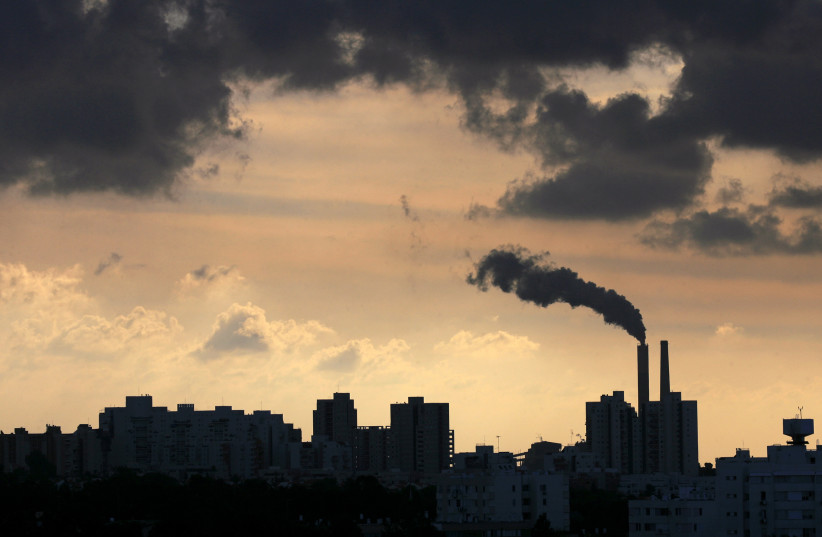
In an interview with The Jerusalem Post, Levine estimated that air pollution in this country causes a prodigious NIS 37 billion worth of damage a year to Israelis. Pollution – “a silent murderer” – is caused by several factors, the most prominent being particulate matter (PM) – a complex mixture of microscopic solid particles and liquid droplets suspended in the air, including smoke, chemical compounds, soot, and dust that penetrate deep into lungs and the bloodstream.
Sources of PM are mostly from combustion (vehicles, power plants, wildfires, wood stoves) and industrial processes, but also natural dust – all smaller than 0.1 microns. But Levine insists that sand and dust from Africa that reach Israel is a minor factor that occurs only a few days a year, so it can’t be blamed for the huge amount of man-made air pollution.
Another source is nitrogen dioxide (NO2), a highly reactive, reddish-brown, pungent-smelling gas and a major air pollutant produced by burning fossil fuels (vehicles, power plants, industry). It is a key component of emissions that creates smog, contributes to acid rain, and causes respiratory issues like asthma, reduced lung function, and inflammation. Forest fires, which are not uncommon in Israel, also cause pollution. Forests, said Levine, must be better planned to reduce these fires.
The third is ozone (O3), another is a volatile gas composed of three oxygen atoms that exists both naturally in the upper atmosphere (stratosphere), acting as a protective shield against ultraviolet radiation high up, said Levine. “But when it’s a pollutant at ground level (troposphere), it is toxic, damages vegetation, and causes respiratory diseases.
Between 2015 and 2023, a total of 4,461 to 6,166 annual premature deaths (PD) in Israel are calculated from ambient exposure to the three pollutants; the number of years of life lost (YLL) ranges between 46,216 and 65,289 per year, according to the study. Both measures are higher for males compared to females for most age groups, except for those 85 and over and infants before their first birthday.
“Israel experiences lower rates of PD and YLL compared to European nations with similar pollutant concentrations – but this difference is largely attributed to Israel’s younger population.”
Report 'underscores importance of air quality to protect public health in Israel'
According to World Bank data, only about 12% of the Israeli population is aged over 65, and Israel has the highest percentage of young population between the ages of 0 and 14, 28.1%. However, children and adults of various ages are also affected by poor air quality, and the elderly population – which has a high risk of PD from exposure to air pollution – is growing. “The findings underscore the importance of continued air quality improvements to protect public health in Israel,” Levine asserted.
“We have to vary our sources of energy, and we must ensure that those who pollute in Israel pay for the damage,” he declared. “We can’t do much to prevent air pollution from Europe and the Palestinian Authority, which also reaches us. But we can reduce our road traffic with clean public transport, better planning of cities that would encourage people to walk or use bicycles, and provide more trees to shade us from the sun. There are many cities abroad that don’t allow polluting vehicles to enter city centers at all.”
Asked whether the growing number of electric cars and buses reduces air pollution here, Levine said: “These improve the situation a bit, but the electricity comes mostly from polluting sources – oil and natural gas. The war with Iran demonstrates the world’s dependence on fossil fuels. Natural gas is not a perfect solution. We have a lot of sun, and we can produce more energy from that. We have relatively large tracts of land in the Negev where solar energy can be produced and sent to the rest of the country. Farms around Israel can also produce energy from the sun.”
An Environmental Protection Ministry exists for this purpose, “but it has to be more active in protecting our air. Industry always wants to protect profits. The Knesset isn’t functioning, so it’s difficult to pass new laws,” Levine said, “and enforcement is very weak. Public health, in general, doesn’t get much attention from the Knesset and government. We are all dependent on modern energy, but we can be smarter.”
Levine calls for prohibiting bonfires on Lag Ba’omer, which cause a great deal of pollution. “Instead, it should be celebrated as a nature holiday.” Also, various demonstrators who burn plastic garbage bins near their homes as a protest must be made aware that they are producing toxic fumes that damage their and their children’s health.
He noted that governments can take real action to reduce air pollution. “China, where many of the world’s products are manufactured, was very polluting. But about 10 years ago, they realized it endangers them, so they invested a lot of money and effort in renewable energy.”
“Israel has a very innovative society; we can do better. We desalinate much of our drinking water (and it lacks magnesium, the mineral that promotes heart health, bone strength, and metabolic function) but the process uses a great deal of energy. If we wasted less water, there would be less air pollution,” Levine said. “There is no full-time health minister, no one to push these challenges forward. The next elected Israeli government must include health and environment ministers who are serious, understand our real needs, and want to take action. We need flexibility. And every time there is an initiative – such as a new airport in the South – its potential effects on public health must be considered.”
The Environment and Climate Change portal is produced in cooperation with the Goldman Sonnenfeldt School of Sustainability and Climate Change at Ben-Gurion University of the Negev. The Jerusalem Post maintains all editorial decisions related to the content.