
Maritime AI company Windward has acquired maritime visual intelligence startup Azimut.ai, adding camera-based vessel identification and tracking capabilities to its growing maritime intelligence platform.
The acquisition introduces a new visual sensing layer to Windward's capabilities, enabling the company to identify and monitor vessels through networks of cameras deployed at ports and maritime chokepoints. The capability is intended to complement existing intelligence sources, including AIS transmissions, satellite imagery, and radio frequency data.
According to the company, Azimut.ai's technology uses cameras deployed at ports and maritime chokepoints to visually detect, classify, and identify vessels in real time and calculate their location, course, and speed directly from video feeds.
The system can "fingerprint" ships and generate tracking data even when traditional vessel-transmitted signals are unavailable or deliberately switched off.
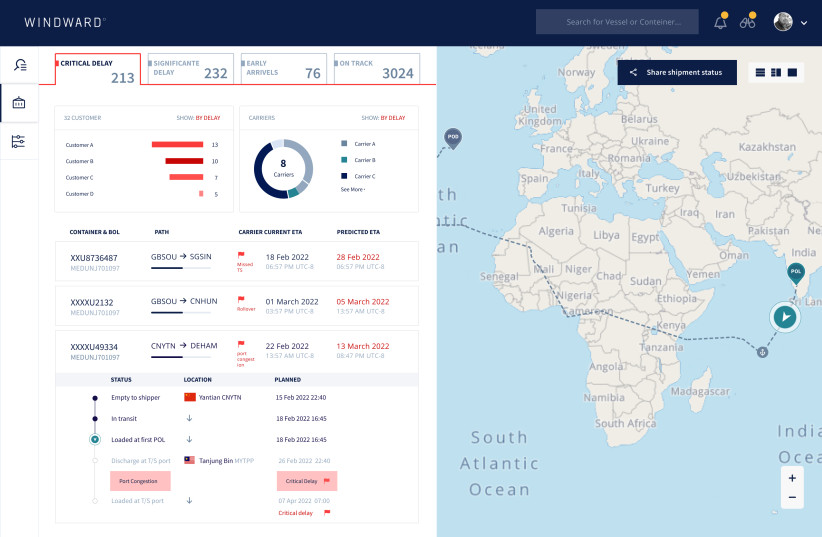
The visual detections will be integrated into Windward's existing platform, where they can be combined with vessel ownership information, sanctions data, cargo intelligence, behavioral analytics, and other risk indicators to create a broader operational picture for government and commercial users.
The move comes as maritime operators face growing challenges from vessels that intentionally disable tracking systems or operate in environments where traditional sensors provide limited visibility. Windward said the addition of visual intelligence is designed to help close those gaps by providing an independent method of vessel identification.
‘Redrawing the boundaries’
"For years, we have used AI to unify every signal the maritime world produces into one operational view," said Ami Daniel, CEO and co-founder of Windward, describing the acquisition as the company's first step toward building a proprietary visual intelligence layer within its broader all-source maritime intelligence strategy.
"Now we are redrawing the boundaries of maritime intelligence,” he said. “Owning these assets outright gives our customers a level of awareness and preparedness no one else can match. In the age of Agentic AI, data is the new oil, and this will allow us to provide our customers access to the most refined, accurate, and relevant dataset for maritime decision-making.”
Founded as a maritime visual intelligence company, Azimut.ai developed software that analyzes live video feeds from existing maritime surveillance cameras. The platform is designed to detect, classify, and identify vessels, calculate their position, course, and speed, and generate alerts when unusual activity is detected.
Also founded as a maritime computer vision company, it developed software that transforms existing maritime surveillance cameras into what it describes as a "smart visual radar." The system analyzes live video feeds, automatically identifies vessels, and generates alerts regarding unusual activity.
According to the company, its technology uses existing electro-optical and infrared camera infrastructure, allowing ports, maritime agencies, and security operators to expand surveillance coverage without deploying additional sensors.
Designed with privacy in mind
Windward said the system is designed with privacy protections and does not provide customers with raw images or video footage. Instead, customers receive intelligence outputs and vessel-related assessments.
The acquisition comes as governments, security agencies, and commercial shipping operators increasingly seek additional methods to monitor vessel activity in crowded waterways and areas where ships may attempt to conceal their movements by disabling tracking systems.
As part of the expansion, the company said it plans to build a broader network of camera installations at strategic maritime locations through partnerships with port operators and other stakeholders across the maritime sector.
"Together, as a community, we are stronger. We invite all stakeholders in the maritime domain, as well as anyone who wants to make a difference for safer and more secure oceans, to reach out and become a site partner,” Daniel said in the release.