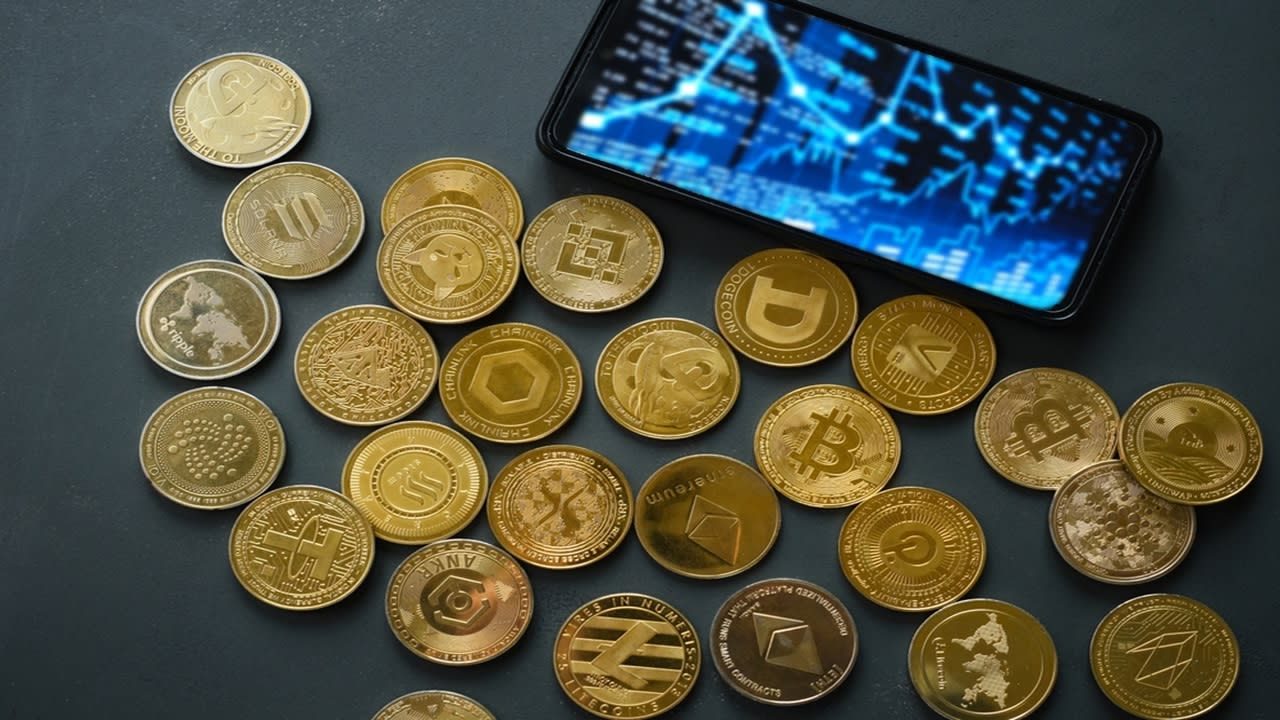
Search engines now treat "instant cryptocurrency exchange" as a category in its own right — dozens of providers compete on speed claims, and most of them are honest about a narrow slice of the market and quietly evasive about the rest. The truth underneath the marketing is that "instant" depends almost entirely on the rails you're using, not on how clever the exchange's UI is. A swap that's genuinely instant on Solana takes seconds; one between Bitcoin and Ethereum still takes minutes even on the fastest service in the world.
What "Instant" Actually Covers
This piece walks through what's happening underneath the "instant" label, where the real time goes, and how to tell a meaningfully fast service from a marketing-fast one. The team behind Crypto Office runs an instant cryptocurrency exchange flow that fits the patterns described here — useful if you want a concrete reference for what the wall-clock numbers actually look like across asset pairs.
When an exchange describes itself as "instant", it usually means one of two distinct things:
- Pre-funded liquidity: the exchange holds inventory of both the input and output assets and lets you trade in and out of its pool sub-second. It rebalances itself in the background. This is how most fiat on-ramps work.
- Pass-through routing: the exchange takes your input asset, routes it through a market maker or a DEX aggregator, and credits the output once both legs settle on-chain. "Instant" here means "no manual review", not "no waiting for blocks".
The first model is fast but limited to the inventory the exchange chose to hold. The second handles more pairs but inherits the speed limits of whichever chain is slowest in the route. Both are legitimately called "instant" by their operators; what differs is the precision of the marketing.
Where the Wall-Clock Time Actually Goes
Pair | Typical wall-clock | What dominates | Truly "instant" feel? |
|---|---|---|---|
USDC (Solana) → USDC (Solana) | <1 sec | nothing — single-chain | Yes |
USDT (Tron) → USDT (Ethereum) | 2–4 min | Ethereum confirmation + bridge | No, but predictable |
BTC → ETH | 10–30 min | Bitcoin confirmation depth | No |
ETH → SOL via aggregator | 1–3 min | bridge settlement + Solana credit | Mostly |
USDC (Polygon) → USDC (Base) | 30–90 sec | CCTP burn-and-mint | Mostly |
The table reflects normal network conditions. Under congestion the numbers stretch — Bitcoin's median confirmation can balloon to an hour, and Ethereum mainnet fees can spike enough that any rational exchange holds the broadcast to avoid overpaying gas. None of this is the exchange's fault; the chains set the floor.
A Walkthrough: From Click to Confirmed
A standard $500 swap of TRC20 USDT for ETH on Arbitrum looks like this from the inside:
- You enter the amount; the exchange quotes a rate locked for 30–120 seconds, depending on pair volatility, and you confirm.
- You send the USDT to the exchange's deposit address; Tron confirms in 15–30 seconds.
- The exchange's risk engine runs an address screen on your sending wallet. Clean → proceed. Flagged → manual review (which kills the "instant" feel).
- The exchange routes the trade: either fills from its own ETH inventory on Arbitrum, or buys ETH on a DEX, depending on pool depth and rate.
- Output ETH lands at your Arbitrum address; Arbitrum confirms in 5–15 seconds.
Total wall-clock on a good day: under a minute. Most of that is the Tron leg, not the exchange logic. Wallets connected to flows like the one Crypto Office operates show you the per-leg timing live, which sets honest expectations rather than pretending the wait isn't there.
When "Instant" Slows Down
Two failure modes account for nearly all the "why is my swap taking so long" complaints:
The first is compliance friction. A wallet with one-hop exposure to a sanctions-adjacent address, a known mixer, or a high-risk cluster gets held for review — sometimes for minutes, sometimes for hours, depending on the exchange's queue depth. The marketing copy says "instant"; the fine print says "compliance review may apply", and most users discover this on the order they wish they hadn't.
The second is network congestion. During a major Bitcoin fee spike, even a top-tier exchange can't broadcast an outbound transaction economically. They batch and wait for the fee market to ease. On Ethereum mainnet, the same logic applies — paying $50 in gas to move a $200 swap eats the entire trade. The exchange's job in that moment is to be honest with the user that the wait is real, not to manufacture a smoothness illusion.
What Most People Get Wrong About the Rate
A frequent misconception is that the spread shown on the exchange is the spread you're paying. It usually isn't. Most pricing engines bundle the spread, the network-fee subsidy, and a small risk premium into a single quoted rate. The "no fee" headlines some platforms advertise are technically honest — they don't charge a separate fee line — but they recover the cost in the spread, often more than what a transparent fee + spread combo would have produced.
The right way to compare instant exchanges isn't to look at advertised fees but to compute the all-in: how much of the input asset's value you actually receive on the destination side, including network costs paid by either party. A small spread on a fast chain beats a "zero-fee" promise on a slow chain once you factor in the rate drift during confirmation.
Worth a closer look
Instant cryptocurrency exchange in 2026 is real for single-chain, deep-liquidity pairs and a credible approximation for everything else — but the floor on speed is set by the chains, not by the exchange. Pick a service that's honest about the wait when one is unavoidable, watch the all-in net rate rather than the headline fee, and your expectations will line up with reality. Run a $20 test swap on a new platform before moving anything meaningful; the dollar of friction is worth not discovering the platform's compliance queue with a real-size trade.
FAQ
How fast is the fastest crypto swap you can actually do today?
Single-chain swaps on Solana between two stablecoins finish in under a second of wall-clock time, with sub-cent network fees. That's the genuine ceiling for "instant" in the current market. Anything cross-chain or involving Bitcoin or Ethereum mainnet is bounded by those chains' confirmation times, regardless of how clever the exchange's routing is. A service claiming sub-minute BTC-to-ETH is either using a custodial workaround or stretching the definition of "instant".
Why does the rate change between when I click and when the funds arrive?
Most platforms lock the quoted rate for a short window — typically 30–120 seconds — to give you time to confirm and broadcast. If the deposit takes longer than the window because of slow chain confirmations, the exchange re-quotes at the new market rate when your funds finally arrive. The behavior is normal; the alternative is the platform absorbing arbitrary rate risk on every quote, which would push them to widen spreads dramatically for everyone.
Is an instant exchange safer than a regular trading account?
It's a different risk profile, not a safer one. Instant exchanges hold your funds for seconds rather than days, which lowers custody risk. But they offer less recourse if something goes wrong with the transaction — there's no order book to dispute, no settlement window to cancel into. For one-off swaps under a few thousand dollars, instant is the lower-friction choice. For larger or recurring flows, the recourse mechanisms of a full trading account often outweigh the few minutes of speed.
This article was written in cooperation with AMRYTT MEDIA