- Price: From NIS 150,000
- Competitors: No direct competitors yet, only regular hybrids like Hyundai Kona, Jaecoo 5, Chery Tiggo 4, and Toyota Yaris Cross
- Liked: Design, quality, space, equipment, fuel consumption, price
- Disliked: Ride comfort, ergonomics
- Score: 9/10
As the end of the month approaches, we’ll be talking more about rising fuel prices. NIS 8? More than that? Until now we’ve been running to safe rooms and shelters, but now the war with Iran is about to hit all of us in the wallet.
Unless you drive an electric vehicle, of course - but then charging anxiety only adds to your concerns. Is the car charged? How much juice is left in the battery? Plug-in hybrid vehicles, on the other hand, claim to offer the perfect solution.
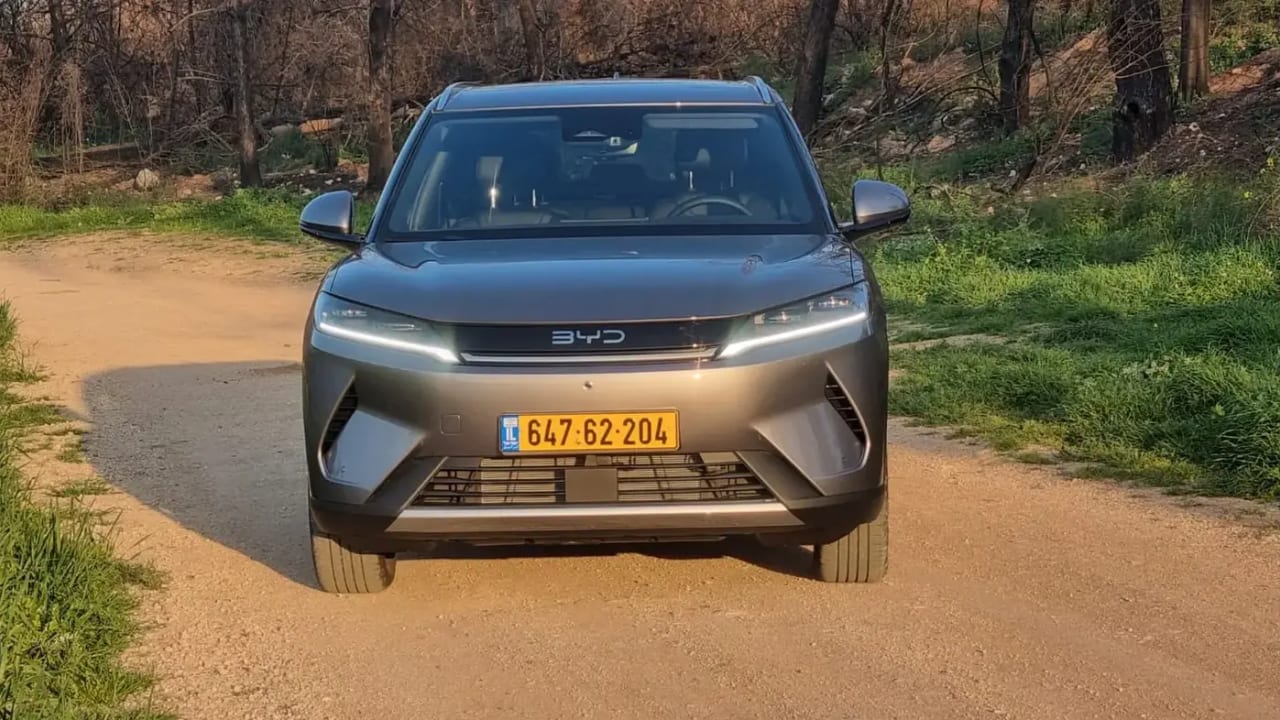
Take the BYD Atto 2, which currently holds the title of the cheapest plug-in car in Israel. At NIS 150,000, this crossover comes with a promise of 90 km of electric range - more than the daily driving distance of most drivers - or 65 km per liter in hybrid mode. And if the battery isn’t charged? You get a hybrid vehicle. Add to that a company car tax benefit of NIS 1,130 per month, compared to just NIS 560 for hybrids and not much more - NIS 1,350 - for electric vehicles.
It’s no surprise that the best-selling car in Israel is the Jaecoo 7 plug-in, but it starts at NIS 180,000. The Atto 2 is NIS 30,000 cheaper. It’s smaller, closer in size to the Jaecoo 5, Nissan Juke, and Skoda Kamiq, which creates the potential for an even bigger hit - especially since it currently has no direct competition. Just as the Atto 2 is sold in a fully electric version (from NIS 149,000), in the coming months plug-in versions of other EVs in this price range are expected to arrive: Deepal 05 and Leapmotor B10, and by the end of the year the Omoda 4 plug-in is also expected. For now, BYD is carving out this segment on its own.

Design:
With a length of 4.31 meters, width of 1.83 meters, height of 1.675 meters, and a 2.62-meter wheelbase, the Atto 2 is a small-large crossover - only 10 cm shorter than the electric Atto 3 and notably tall for its size. The resemblance to the Atto 3 is evident in the design, but here it feels more modern - pleasant, though not head-turning. The door handles are conventional, not the pop-out type now restricted under new regulations due to safety concerns in accidents.

Interior:
There’s a 12.8-inch central screen with wireless Android Auto and Apple CarPlay, alongside a separate 8.8-inch digital instrument cluster, as seen in other BYD models.
The design is clean, with plenty of storage compartments and relatively high-quality materials for the segment, including lots of faux leather and soft plastics. There’s a choice between dark and light interior colors, with the lighter option significantly improving the ambiance. Thanks to the extensive use of synthetic leather, cleaning is easy and it doesn’t absorb dirt like fabric upholstery.
Mirror adjustment, indicators, and wipers are still operated via physical controls. Climate control is managed through the screen, but a shortcut bar remains visible at all times - even when using Android Auto or CarPlay. There are physical buttons for volume, drive mode selection, defogging, and more. It’s good by the standards of Chinese EVs, but still not ideal, as it requires taking your eyes off the road to adjust the climate system.
The seating position is high, the seats are comfortable and electrically adjustable, and headroom is exceptional thanks to the vehicle’s height.
In the rear, there’s a flat floor and good seat height - not as low as in many Chinese vehicles. Adult seating is very comfortable. Two passengers will sit comfortably; a third will be tighter. The width allows seating for three children, even with two child seats installed. Rear air vents are included - still missing in many cars in this segment. The trunk offers a respectable 425 liters across two levels, but the tailgate isn’t electric (unlike the EV version), and there’s no spare wheel.

Equipment:
A 12.8-inch central screen (no longer rotating) with wireless Android Auto and Apple CarPlay, alongside an 8.8-inch instrument cluster. There’s also voice control, electrically adjustable front seats, wireless phone charging with cooling, rain sensors, and a 360-degree camera system. Unlike many other Chinese models, there’s no panoramic roof.

Powertrain and performance:
A combination of a 1.5-liter gasoline engine and an electric motor produces 212 hp. That’s impressive, especially for the price, but the car weighs 1.7 tons due to the dual powertrain and large battery.
Performance is very good without being thrilling. It’s quite quick for a crossover of this size and notably quiet. Even when the engine kicks in for charging or assists above 100 km/h, it’s less intrusive than in other plug-in hybrids. Driving modes include Eco, Normal, Sport, and Snow - performance is good in all, with a clear advantage in Sport.
Fuel consumption:
One of the main reasons these cars exist. BYD claims 90 km of electric range, 65 km per liter with a charged 18.3 kWh battery, and 19.6 km per liter when it’s depleted. We achieved 76 km on electric power before the battery dropped to 25% and called in the gasoline engine. With a charged battery, we got about 40 km per liter in mixed relaxed driving. With an empty battery, consumption rose to 18 km per liter - still respectable and better than some hybrids in this price range, though not as good as the Toyota Yaris Cross.

Electric:
AC charging at up to 6.6 kW, about 3.5 hours from 10% to 80%. No DC fast charging.
Ride and handling:
The plug-in version does not have the more sophisticated multi-link rear suspension found in the electric version; instead, it uses a torsion beam. On European roads it felt acceptable, but on Israeli roads the bumps are more noticeable and comfort suffers. The suspension operates quietly, body roll is limited, and the steering is accurate. It’s not sporty, but not embarrassing either. The use of Korean Hankook tires definitely helps.

Bottom line:
The Atto 2 plug-in is a very good deal for private buyers - and even more so for company car users. It’s a proper family car: Spacious, quick, and efficient. Ride comfort and ergonomics are its main drawbacks, but at NIS 150,000 these are forgivable. In times of growing uncertainty about fuel prices, it offers a certain level of insurance against rising costs - and peace of mind from constantly worrying about a draining battery.
At least until direct competitors arrive, the main threat to the Atto 2 may come from a simpler plug-in version on the way, with a 7.8 kWh battery and just 40 km of electric range - but with a price expected to be NIS 10,000 lower. Yet another Chinese model that leaves European and Korean manufacturers scratching their heads in frustration.
BYD Atto 2 Plug-in: Technical Specifications
Engines: 1,495 cc gasoline + electric motor, 212 hp, 30.6 kgm torque
Transmission: Automatic, direct drive, front-wheel drive
Electric:
- Battery capacity (kWh): 18.3
- AC charging rate (kW): 6.6
- DC fast charging: Not available
Performance (manufacturer):
- 0–100 km/h (seconds): 7.5
- Top speed (km/h): 180
- Electric range (km, manufacturer): 90
- Electric range (km, test): 76
- Fuel consumption with charged battery (manufacturer, km/l): 65
- Fuel consumption with charged battery (test, km/l): 40
- Fuel consumption with depleted battery (manufacturer, km/l): 19.6
- Fuel consumption with depleted battery (test, km/l): 18
Dimensions:
- Length (m): 4.33
- Width (m): 1.83
- Height (m): 1.675
- Wheelbase (m): 2.62
- Trunk volume (liters): 425
- Weight (kg): 1,695
Safety:
- Euro NCAP rating: Not tested
- Active safety: Autonomous emergency braking (forward and reverse), adaptive cruise control, lane keeping and departure prevention, blind spot monitoring and collision prevention, door opening warning, driver attention alert
Warranty:
- 6 years or 150,000 km for the vehicle
- 8 years or 200,000 km for the battery
- 8 years or 150,000 km for the electric motor and controller