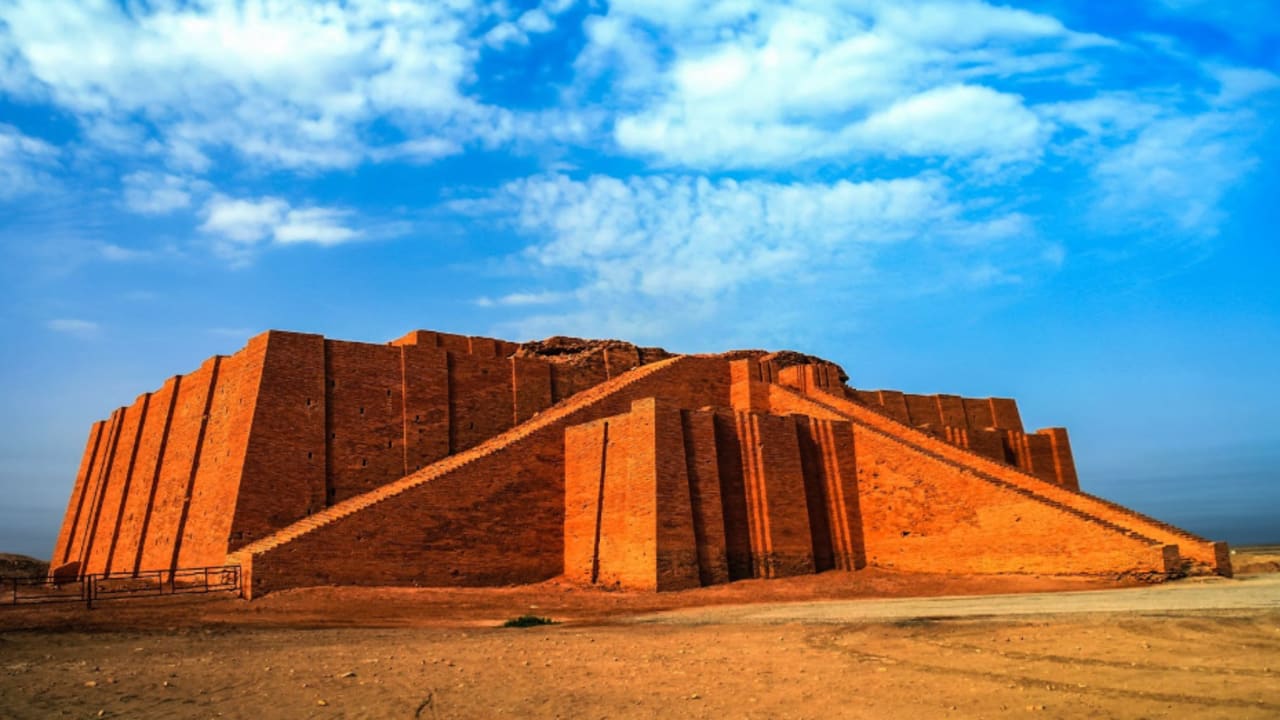
Iraq has begun restoring the ancient Ziggurat of Ur using locally made bricks and traditional building methods, Iraqi outlet Shafaq News reported two weeks ago.
According to Shafaq, the current initiative is expected to include restoring the first level of the 4,000-year-old temple and its three main staircases, repairing cracks on the second level, and reconstruction work on the third level based on available archaeological evidence.
This marks the “seventh major restoration campaign at the ziggurat since its construction under the Third Dynasty of Ur around 2112 BCE,” Shafaq noted, adding that the work is expected to be completed by July 2026.
The ziggurat was originally constructed in honor of the Mesopotamian moon god Nanna, the patron deity of Ur.
It later crumbled during the Neo-Babylonian period, until it was eventually restored by the last Neo-Babylonian king, Nabonidus, who ruled from 556 BCE until the fall of the empire.
In 1862, Henry Rawlinson identified Ur Kaśdim - the birthplace of Abraham in Jewish tradition - with Tell el-Muqayyar, a site located near the ziggurat.
Today, it remains one of the best preserved examples of ancient Mesopotamian architecture.
Climate change putting site in danger of erosion
In a video published in early May, Reuters revealed that the Iraqi government had announced an initial budget of $382,000 to restore and save the ziggurat from climate change.
“The site is in a state of emergency,” Reuters quoted archaeologist Karrar Jamal Abed as saying. “It is directly exposed to deterioration and collapse because of weather conditions.”
Reuters reported that according to local authorities, the monument - and others like it - have been affected by harsh, dry weather which is increasing soil salinity, adding that a combination of wind and sand dunes appear to have led to erosion on the temple’s northern side.
Previously, UNESCO has warned that archaeological sites in southern Iraq are highly vulnerable to erosion caused by the elements and lack of long-term conservation measures.
Archaeologist Kadhim Hassoun Honeihin, who is overseeing the restoration, emphasized to Reuters his team’s accuracy in rebuilding the historic site.
“For the paving bricks, a sample was taken from the ziggurat and a replica of the original was made, containing the same chemical materials and physical properties,” Honeihin explained. “Regarding the mud, it was handmade on-site in Ur, and the clay was taken from an environment similar to that of the ancient city of Ur.”
Honeihin shared that he believes the ziggurat will receive regular maintenance in the future, as the site no longer has “barriers of nature or man-made structures to shield it from the full range of weather elements.”
Iraq reportedly looking to restore second monument
Shafaq also reported that Iraqi antiquities officials have also begun to advance a second preservation effort, supported by Italy, to restore and protect the Taq Kasra site (also known as the Arch of Ctesiphon) in Baghdad.
A team of Iraqi engineers and archaeologists recently visited the site to review an Italian proposal “”aimed at treating structural cracks and preserving the landmark in line with international conservation standards,” Ali Basim, director of Baghdad Antiquities and Heritage, told Shafaq.
Basim added the the preservation is most likely needed due to the increasing numbers of Iraqi and foreign tourists at the site.