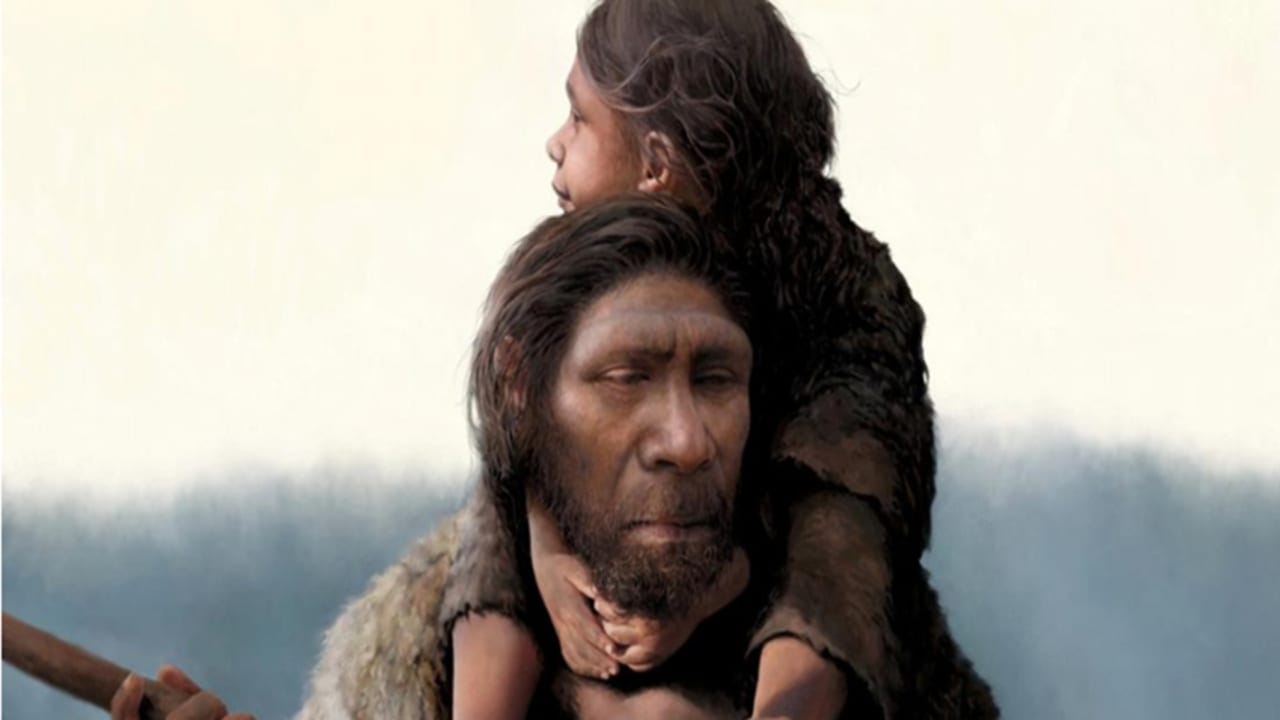
DNA belonging to two Neanderthals, whose ancestors were likely cousins, was found in the same Siberian cave about 10,000 years apart, according to a study published in March in the journal Proceedings of the National Academy of Sciences (PNAS).
The study analyzed DNA extracted from a 110,000-year-old bone fragment of a male Neanderthal (Neanderthal D17), comparing it with previously discovered DNA from an older, roughly 120,000-year-old female (Neanderthal D5).
Both the male and female were recovered from the Denisova Cave in Siberia's Altai Mountains.
Researchers found that the two shared ancestors were close relatives, either first cousins or double first cousins.
Further analysis of the genetic similarity showed that Neanderthals in the Altai region likely lived in groups of fewer than 50 people, unlike later Neanderthals in western Europe who lived in larger, less isolated communities.

This meant that “Neanderthal populations accumulated allele [alternate forms of the same gene] frequency differences more rapidly than the ancestors of present-day human groups,” according to the study.
Researchers discover fourth Neanderthal genome
Additionally, researchers found traces of Denisovan DNA in both D17 and D5, presenting a fourth, previously unknown Neanderthal genome that left no comparable mark on later Neanderthal remains found in the same cave.
The Denisovans were an additional species of early human living in the Altai region during the Middle to Late Pleistocene, approximately 200,000–32,000 years ago.
“It is likely that Denisova Cave was part of a broader landscape used repeatedly by these Neanderthal populations over time, rather than a site occupied by a single, continuous group," Diyendo Massilani, a genetics professor at the Yale School of Medicine and study first author, told Live Science.
Massilani added that the large amount of genetic separation may have limited the Neanderthals' ability to adapt to environmental changes.
“Even though the individuals from which we have genomes were separated for only about 50,000 years on average, they reached levels of difference similar to what we see today between some of the most distinct human populations, like people from Central Africa and Papua New Guinea that separated about 300,000 years ago.”