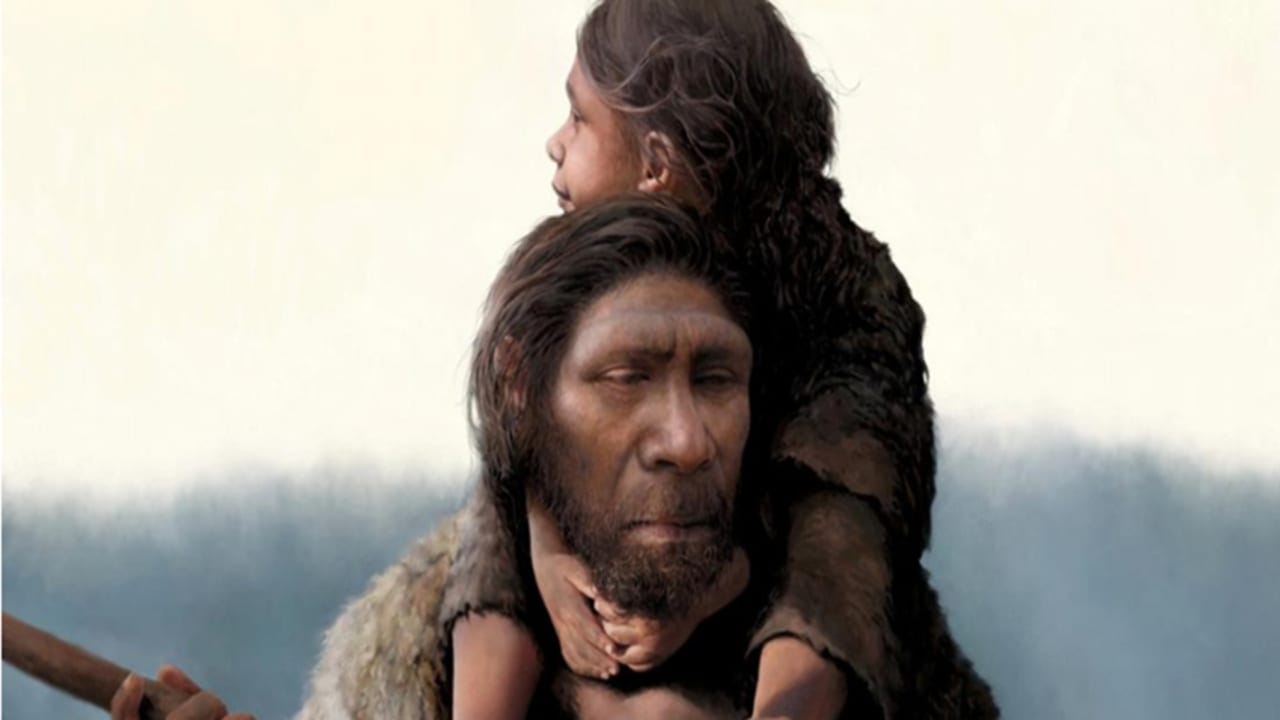
A new genomic analysis proposes that interbreeding between Homo sapiens and Neanderthals was strongly sex-biased. Pairings occurred primarily between Neanderthal males and modern human females. This pattern best explains why the human X chromosome contains large “Neanderthal deserts” where their DNA is scarce. The researchers report a mirror image in Neanderthal genomes, with more Homo sapiens ancestry on the Neanderthal X chromosome than on other chromosomes. The signal aligns with multiple mating episodes separated by roughly 200,000 years and argues against reproductive incompatibility as the main driver.
The pattern is detected in ancient remains such as the Altai Neanderthal, whose X chromosome carries a higher proportion of modern human ancestry. This sex bias offers a parsimonious account of the genetic asymmetry once attributed solely to natural selection or “toxic” gene incompatibilities. Gene flow “occurred predominantly between Neanderthal males and anatomically modern human females,” said Alexander Platt, one of the study’s authors. He added that the findings reflect behavior and social dynamics as much as biology, according to The Guardian.
Exploring the sex bias
The study was led by geneticist Sarah Tishkoff with researcher Alexander Platt at the University of Pennsylvania. The team compared modern human genomes with data from Neanderthal fossils to track the flow and placement of archaic DNA. Their next steps include probing how the observed sex bias evolved over time. That includes potential differences in gender dynamics within Neanderthal groups or variations in migration habits that might have steered encounters and shaped mate choice across different eras and regions.
Modern humans and Neanderthals share a common ancestor that lived in Africa around a million years ago. Their lineages appear to have diverged roughly 600,000 years ago. Neanderthals spread across Eurasia and persisted until about 40,000 years ago while modern humans evolved in Africa. Multiple migrations out of Africa led to encounters and interbreeding. Significant admixture events are dated between 49,000 and 45,000 years ago, with the last major migration beginning around 60,000 years ago.
Today, most people of non-African ancestry carry about two percent Neanderthal DNA. Many in sub-Saharan Africa have less because their ancestors did not meet Neanderthals. Some African groups retain up to roughly 1.5 percent through later back-migrations into Africa, according to Science Times.
Neanderthal deserts
The “Neanderthal deserts” are especially pronounced on the human X chromosome and stand out compared with non-sex chromosomes. Conversely, within Neanderthal genomes, researchers have identified “human deserts” that reflect the uneven uptake of Homo sapiens ancestry by Neanderthal populations. This mirror image complicates the notion that natural selection acting on harmful DNA alone explains these gaps. The study evaluates several potential mechanisms, including meiotic drive, genetic incompatibility, lower survival of some hybrids, and mate preference. Based on cross-genome comparisons, the authors argue that mate preference is the strongest fit to the data.
Mate preference can include a wide range of encounters, from coercive or violent interactions to voluntary couplings. It does not reflect purely demographic patterns or a strictly “survival of the fittest” filter. The researchers underline that genetic data cannot determine whether specific encounters were consensual. The aggregate signal points to a consistent sex bias over long time spans.
Archaeogenetic clues add texture to this picture of interactions. The encounter between Homo sapiens and Neanderthals roughly 50,000 years ago altered human history, and some offspring appear to have grown up in Neanderthal societies. It remains unclear whether modern human women moved into Neanderthal groups or whether Neanderthal men frequented human enclaves. Regions such as the Zagros Mountains may have provided meeting grounds for the two populations. Over time, anthropologists see a process of assimilation rather than a sharp replacement.
Numerical advantages of Homo sapiens - possibly by a factor of 10 to 20 - contributed to a genetic flood that absorbed Neanderthal lineages into the expanding Homo sapiens gene pool. In parallel, earlier portrayals of Neanderthals as brutish or culturally deficient have eroded as evidence of symbolic behavior, such as jewelry, has emerged.
The genetic legacy of these ancient contacts persists across nearly all people outside Africa and, through back-migration, in portions of Africa as well. Neanderthal DNA in living humans remains biologically active. Segments influence circadian rhythms, elements of immune function, skin characteristics, and pain perception. In some cases they provide defenses against certain diseases while increasing vulnerability to others.